⚠️ Not financial advice: This post is for educational purposes only. I'm not a licensed financial advisor. The numbers below are reasonable estimates based on my own experience and typical market figures — your costs will differ. Please do your own research and consult a professional before making any financial decisions.
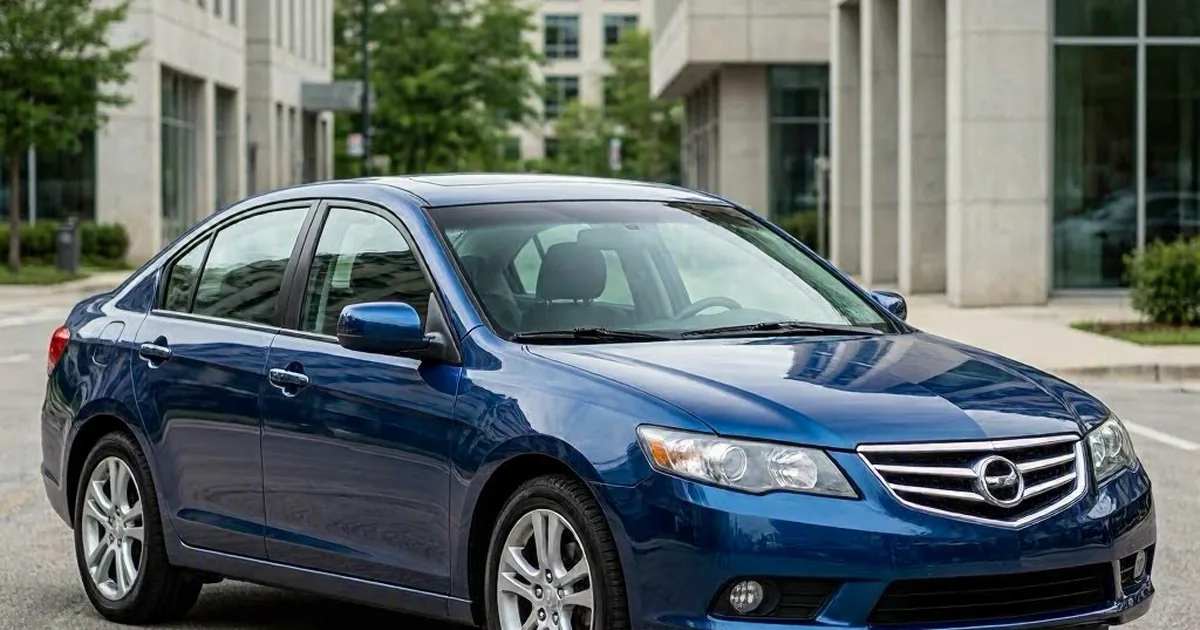
People love to say a car is the worst purchase you'll ever make — a depreciating asset that loses value the moment you drive it off the lot. They're right. But I've started thinking about my car the opposite way. My 2007 Acura TSX is, dollar for dollar, the best investment I've ever made. Not because it went up in value — it absolutely didn't — but because of all the money I never spent by keeping it.
I bought it new in 2007. It's now 2026. That's 19 years in the same car. In that time, the average person around me has cycled through two or three vehicles, each one resetting the depreciation clock and the car payment with it. I just kept driving. Oil changes, the occasional age-related repair, and that's about it. Let me show you what that decision was actually worth.
A Car Is a Depreciating Asset — That's the Whole Point
Here's the uncomfortable truth about new cars: depreciation is the biggest cost of owning one, and it's front-loaded. A typical new car loses roughly 20% of its value in the first year and around 60% over five years. On a $35,000 car, that's more than $20,000 of value gone in five years — before you've paid a dollar of interest, insurance, or maintenance.
That curve is brutal, but it has a quiet upside: it flattens. Once a car is several years old, it's already shed most of the value it's ever going to lose. My TSX did all of its steep depreciating fifteen-plus years ago. Every mile I drive now rides on the flat part of that curve — the cheapest stretch of a car's entire life. Buying new, over and over, means paying that steep early drop again and again. I paid it once, in 2007, and never again.
What 19 Years of a Paid-Off Car Actually Costs
The honest counterpoint is that old cars need work. They do. But "needs work" and "needs a car payment" are very different numbers. Here's roughly what the TSX has cost me to keep on the road:
Call it under $900 a year, all-in, across nearly two decades. That's the entire cost of keeping a reliable car running. Compare that to a single monthly payment on a new car — often $500 to $700 a month — and the gap is almost comical. My whole year of car ownership costs less than two months of the average new-car payment.
The mental reframe: a repair bill isn't a sign you should buy a new car. It's the price of not buying one. A $700 repair feels like a lot in the moment — until you remember the alternative is a $30,000+ depreciating asset and 60 monthly payments. I'll take the repair every time.
If you want a framework for deciding which expenses are genuinely worth it and which just feel urgent, that same logic powers our take on joy budgeting — spending intentionally on what you actually value. A car you already love and trust is about as joy-efficient as a purchase gets.
The Big Number: What I Saved by Not Buying New Cars
This is where it gets fun. Over 19 years, a typical driver replaces their car two to three times. Each replacement isn't just a sticker price — it's depreciation, sales tax, registration, and usually financing on top. Let's run a conservative version of what I avoided.
| Cost Avoided | Estimate (19 yrs) |
|---|---|
| 2–3 new cars avoided (net of trade-in value recovered) | $58,000–$82,000 |
| Lower insurance (dropped collision/comp on a low-value car, ~last 10 yrs) | ~$10,500 |
| Less what I actually spent on upkeep | −$16,720 |
| Net Estimated Savings | $52,000–$76,000 |
So somewhere between $52,000 and $76,000 stayed in my pocket — money that would otherwise have evaporated into the depreciation of cars I didn't need. And notice the upkeep line is the smallest number in the table. The repairs everyone worries about are a rounding error next to the cost of replacing the whole car.
The Insurance Bonus Nobody Talks About
Here's a saving that sneaks up on you: insurance. Your premium is tied heavily to your car's value, because that value is what the insurer might have to pay out. A brand-new $35,000 car carries full collision and comprehensive coverage, and the premium reflects it.
My TSX is worth a few thousand dollars at most. Once a car's value drops far enough, full coverage stops making sense — the premium starts approaching the maximum payout. So I dropped collision and comprehensive years ago and carry liability-focused coverage. That move alone saves me roughly $1,000 a year versus insuring a financed new car — call it about $10,500 over the last decade. (Exact numbers vary by state, record, and insurer, so treat this as a ballpark.)

Rally's two cents: "Nineteen years in this car and the back seat still smells faintly of me. That's not depreciation — that's character. The humans saved enough to buy a whole second car they'll never buy. I just want it noted that the heated seats still work, and I am the primary beneficiary."
Now the Best Part: The Money Didn't Just Sit There
A car will never be an investment — it goes down in value, full stop. But the money you don't spend on one absolutely can be. This is the part that turns "I saved money" into "I built wealth."
Say roughly $82,000 of avoided car spending — the upper end of those dodged purchases — had been put into a low-cost S&P 500 index fund instead of poured into new cars over those 19 years. At the S&P 500's long-run historical average return of about 10% annually, that money doesn't just sit — it compounds.
| Scenario | Value Today (est.) |
|---|---|
| Money spent on new cars (depreciating) | ~$0 left |
| Same money invested in an S&P 500 index fund (~10% avg) | ~$142,000 |
| Realized opportunity gain | ~$60,000 |
That ~$82,000 I never spent could be worth around $142,000 today — roughly $60,000 in investment gains stacked on top of the direct savings. The new cars I didn't buy would be worth close to nothing now. The index fund I could have fed instead would be a six-figure asset still growing. That's the investment. The car was just the decision that freed the money.
⚠️ A fair caveat: 10% is a long-run average, not a guarantee. Markets fall, sometimes hard, and real returns vary year to year. Past performance doesn't promise future results. The point isn't the exact figure — it's the direction: money not sunk into a depreciating asset can compound into something real. New cars only ever go the other way.
If you're still building the habit of routing "saved" money somewhere productive instead of letting it leak away, our walkthrough on automating your savings and investments shows how to make that transfer happen without willpower. The hardest part of investing the difference is remembering to actually invest it.
So Should You Keep Your Old Car Forever?
Not blindly. The math flips when repairs get frequent and expensive enough to rival a car payment, or when a car becomes genuinely unsafe or unreliable for your life. If you're sinking $700 into it every other month and getting stranded, that's a different calculation. Safety and reliability come first — always.
But for a well-built, well-maintained car that still runs great? The "responsible adult" instinct to upgrade is usually just marketing in disguise. A reliable paid-off car is one of the most powerful wealth-building tools hiding in plain sight, precisely because it's boring. Mine has a few rattles and a dated infotainment screen. It also bought me an estimated $52,000–$76,000 in savings and a shot at a six-figure investment. I'll keep the rattles.
The same principle — let an asset you already own keep working instead of constantly trading up — runs through how we think about building real assets versus chasing the appearance of wealth. Sometimes the richest move is the one that looks the least impressive in the driveway.
One caveat worth knowing if you are genuinely in the market: there's now a tax deduction for up to $10,000 of car loan interest on a new, U.S.-assembled vehicle. It's real, and worth claiming if you're buying anyway — but we ran the numbers, and at a few hundred dollars in actual savings it comes nowhere close to offsetting what a new car costs you in depreciation.
Frequently Asked Questions
Is it cheaper to keep an old car or buy a new one?
For most drivers, keeping a paid-off, reliable older car is far cheaper. Even with rising repair bills, annual upkeep on a well-kept car is usually a small fraction of the depreciation, financing, and higher insurance of a newer one. In my case, keeping one car 19 years saved an estimated $52,000–$76,000. The math only flips when repairs become frequent and costly enough to rival a car payment.
How much does car depreciation cost over time?
Depreciation is the largest ownership cost for most people and it's front-loaded — roughly 20% lost in year one and around 60% over five years. On a $35,000 car that's $20,000+ gone in five years before any other cost. Driving a car past that steep early drop lets you avoid paying it again.
Does an older car cost less to insure?
Often yes. Once a car's value drops low enough, many owners drop collision and comprehensive coverage since the payout no longer justifies the premium. That can save roughly $1,000 a year versus full coverage on a financed new car — about $10,500 over a decade in my case. Exact savings depend on your state, record, and insurer.
Is a car ever really an investment?
No — a car is a depreciating asset. But the money you avoid spending on one can become an investment. The roughly $82,000 I didn't spend replacing cars, if invested in an S&P 500 index fund at its ~10% historical average, could be worth around $142,000 today. The car freed the money; the index fund did the compounding.