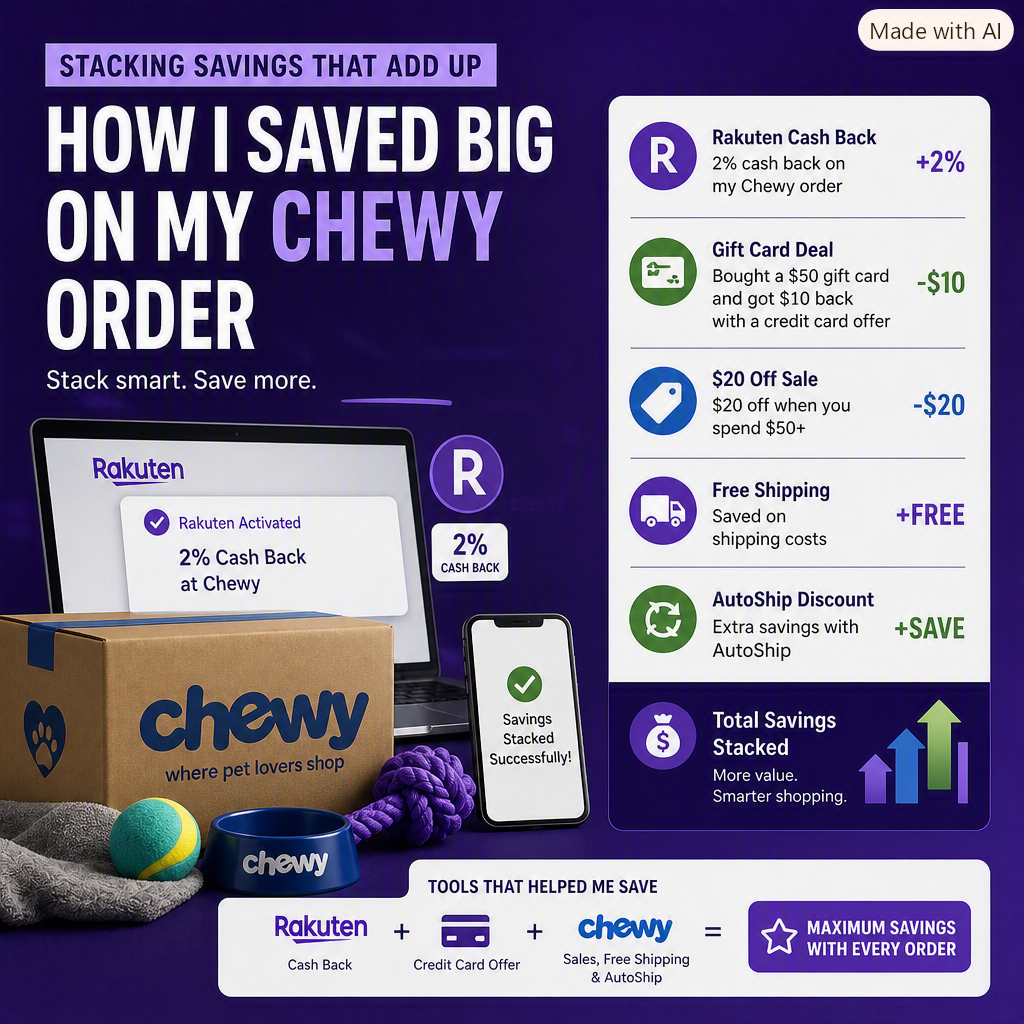
A routine $65.50 Chewy order became a real-world test of four savings layers that have nothing to do with each other: Rakuten's browser extension, a gift card bought through a card offer, a site-wide sale, and an autoship discount. Here's the actual receipt and the math showing how it landed at about $32.60 out of pocket.

Capital One quietly changed how Venture X lounge access works on February 1, 2026 — authorized users lost free entry by default, and primary cardholders lost their free guest passes too. Here's exactly what changed, why it happened, and the actual break-even math on whether paying $125 per authorized user is worth it.

Mixing side hustle money into your everyday checking account isn’t just messy bookkeeping — it’s the reason so many side hustlers get hit with a tax bill they can’t cover every April. Here’s the two-account system that separates spendable money from the government’s share the moment it lands, plus the real self-employment tax math and the one free ID number that keeps your Social Security number off client paperwork.

Almost everything written about layoffs is written for people who have already been laid off — which is the wrong moment, because the most valuable moves all require the one thing you stop having when the meeting ends: a job. Here’s the 90-day version: the borrowing to do while you’re still employable on paper, how to find your severance number before you need it, and how to convert “I spend $4,200 a month” into an actual runway in months.
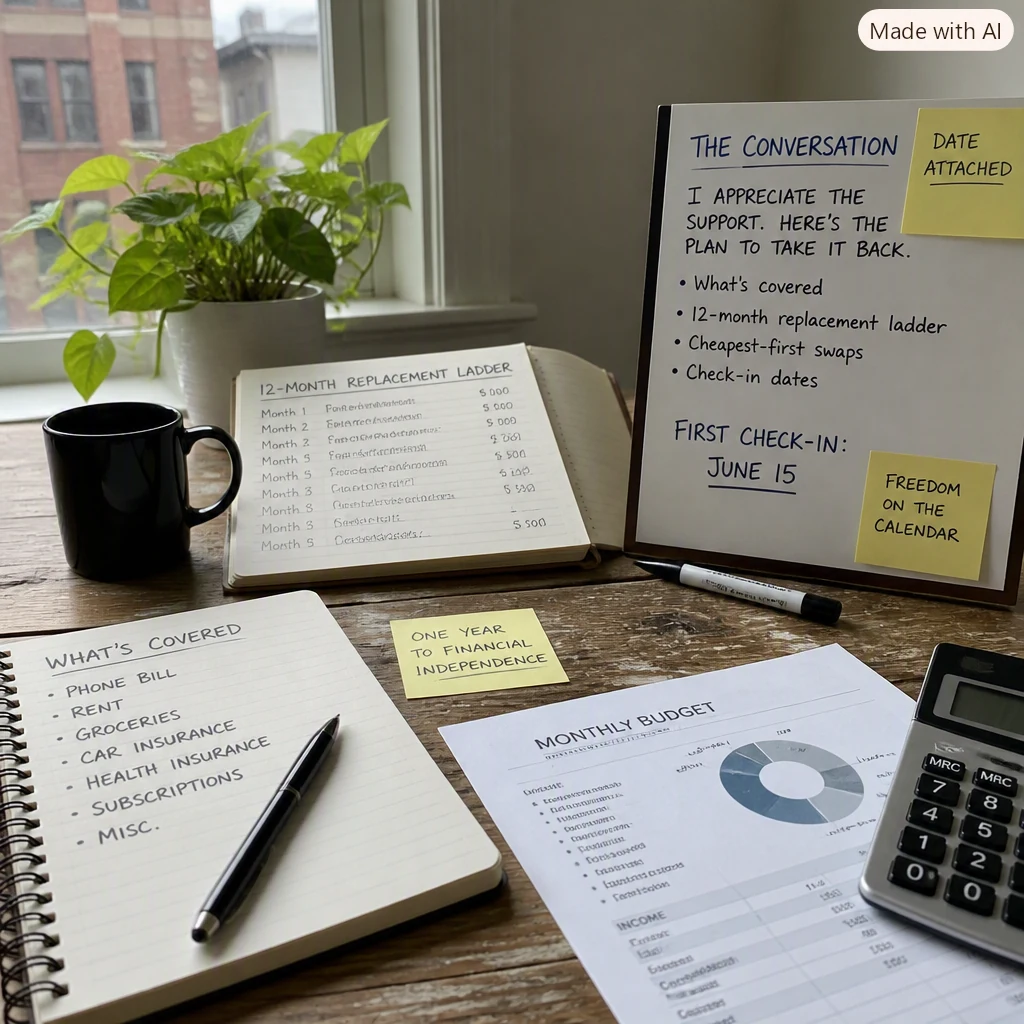
Every article about adult kids on the family payroll is written for the parents — should you cut them off, are you enabling them. This one is for the person receiving the money. The Fed found 47% of adults 18–29, and one in four aged 30–44, still get help from outside their household, most often for a phone bill, general expenses, or rent. Here’s how to name what you’re actually being covered for, build a replacement ladder that takes it back cheapest-first over twelve months instead of all at once, and have the conversation with a date attached.

“Grocery chess” is what a May 2026 survey of 783 millennial shoppers called something a lot of people were already doing: checking sales across a couple of stores before building the week’s meals, instead of the other way around. With food-at-home prices forecast to climb another 2.5% in 2026 on top of prices already roughly 26% higher than five years ago, here’s the actual math behind the strategy — plus the unit-price trick, the stockpiling rule, and when store-hopping stops being worth it.

AI tools didn't create new side hustles — they lowered the barrier to existing ones. A workflow that used to take a professional copywriter four hours now takes forty minutes, and small businesses are paying for that output the same way they always have. Here's what actually earns in 2026, what the honest income ranges look like, and three AI hustle categories that sound better than they are.

Four years of apartment overbuilding handed renters real leverage: nearly 40% of Zillow listings came with a concession this spring, and national median rent actually fell 1.2% year over year. But vacancy just ticked down for the first time since 2022, which means the window is closing. Here's how to price your unit with real comps, time the ask 60–90 days out, and send the email that gets your renewal increase cut — plus the walk-away math that tells you when moving is actually cheaper.
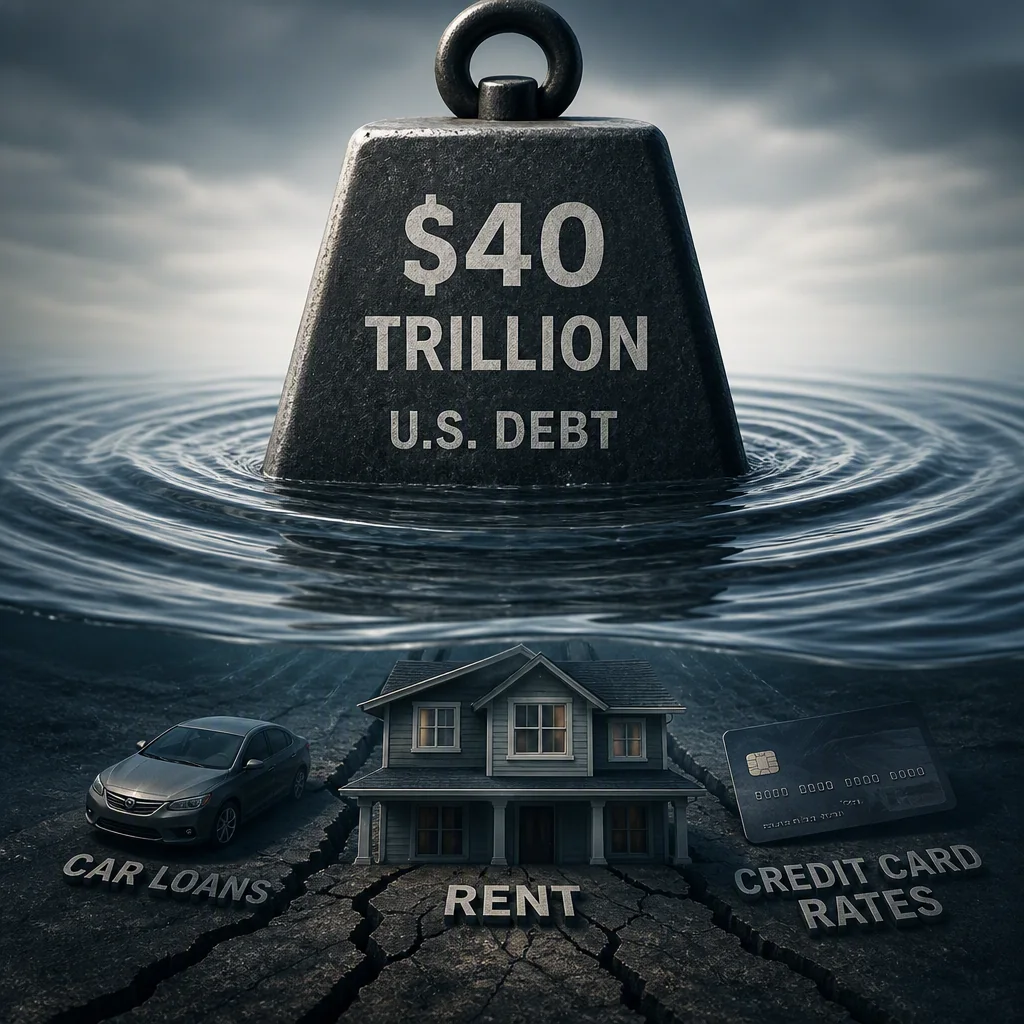
US government debt crossed $40 trillion on August 19 — doubled since 2017, and two years ahead of what the CBO projected. Divide it by the population and you get $117,000 "per person," which is the most misleading number in the whole conversation: you don't owe it, and nobody will ever bill you. What the debt does do is set the floor under every rate you're quoted — here's what one percentage point costs on a $400,000 mortgage, why the 2032 Social Security date matters more to a 30-year-old than the headline number does, and four moves that make sense no matter what Congress does.

ETIAS keeps slipping — the EU quietly deleted its "last quarter of 2026" launch date in July, and reporting now points to 2027. But the biometric border system it depends on went fully live in April, and it pushed passport-control queues to two and three hours across 15 countries this summer. Here's what the €20 fee will actually cost when it arrives, how to spot the 100+ fake ETIAS sites charging triple for it, and the one booking change that keeps a border queue from costing you a flight.
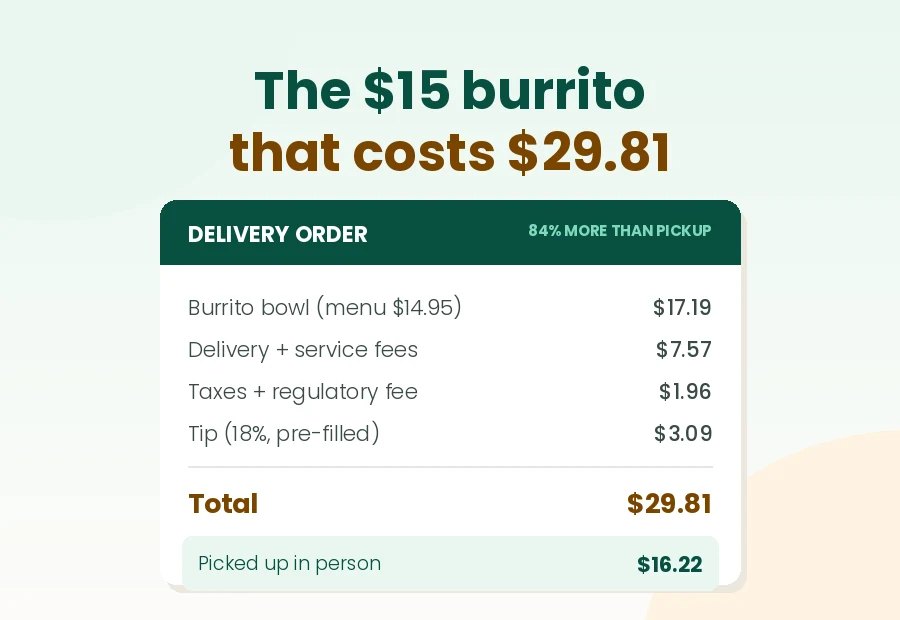
A LendingTree analysis found food delivery costs 79.5% more than picking up the same meal — and the delivery fee isn't where most of that money goes. Here's a $15 burrito bowl itemized line by line on DoorDash, including the menu markup that never appears on your receipt, plus four ways to cut the bill and the one habit that beats all four combined.

A Labor Department proposal issued in March opened the door for 401(k) plans to hold private equity, real estate and crypto — and the most likely way it reaches your account isn't a form you sign, but a quiet change inside the target-date fund you already own. Nothing has been forced into anyone's account yet, but the products are built and the decision is being made a level above you. Here's the ten-minute check on your own plan, and the three numbers that decide whether it's a reasonable deal.
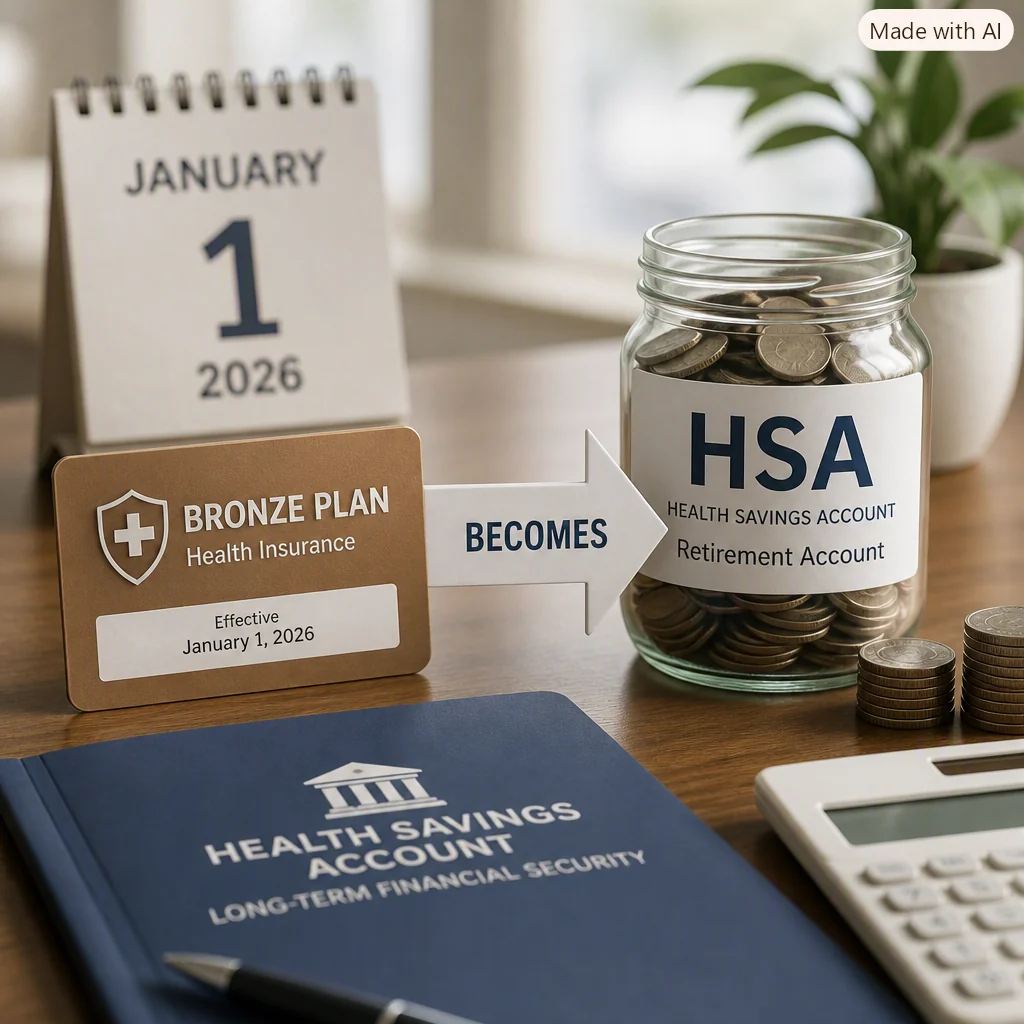
On January 1, every ACA Bronze and catastrophic plan quietly became HSA-eligible — the biggest change to health savings accounts in nearly two decades, and almost nobody was told. If you buy your own insurance, you just got access to the only account that's tax-free going in, while it grows, and coming out. Here's how to check your plan and the move that turns it into a retirement account.

The FTC's junk fees rule forced hotels to advertise all-in pricing — but it never banned resort fees. They didn't disappear, they just moved into the total. Here's how to spot one before you book, which chains waive them on points stays, and what to say when a fee shows up that shouldn't have.
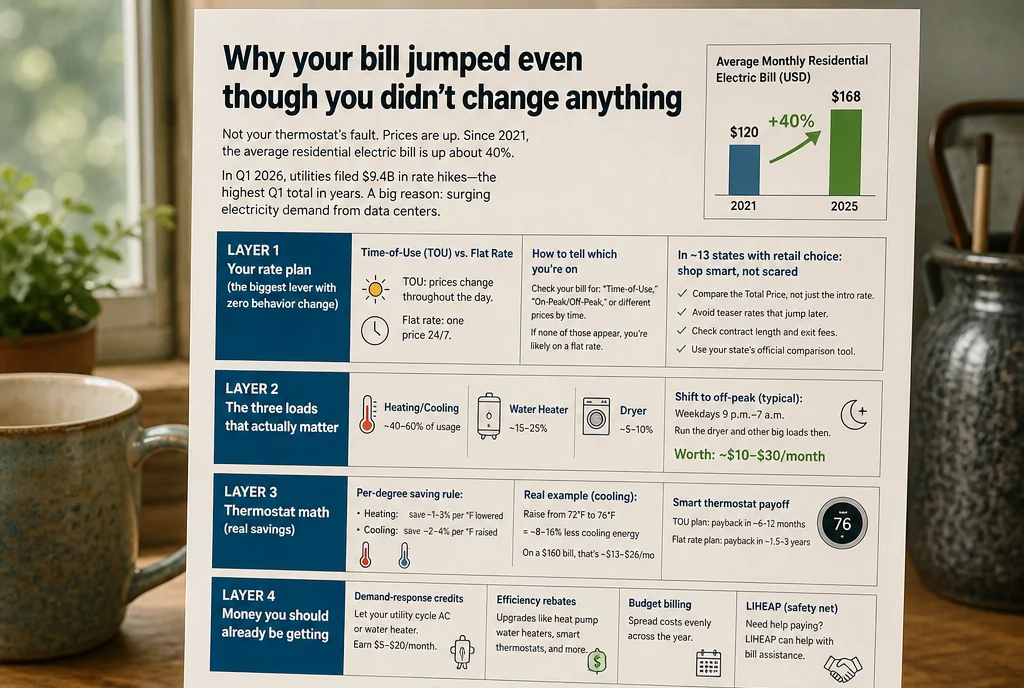
Your usage didn't change — the price did. Electricity is up roughly 40% since 2021, with another $9.4 billion in rate hikes filed in Q1 2026 alone. Here are the four layers that actually lower the bill, starting with the rate-plan lever most people never touch — plus a section on what still works when you rent.

You heard "no tax on tips" — then payday came and your check looked identical. That's not a mistake: it's a deduction, not an exemption, so tips and overtime are still withheld on and still hit with the full 7.65% FICA bite. Here's what it's actually worth on three real paychecks, why a nurse who earned $14,904 in overtime can only deduct $4,968 of it, and the 15-minute check to run on a pay stub before December.

The New York Fed says 41.5% of recent grads are working jobs that never required their degree — two in five, and it's a market condition, not a personal failure. Every article aimed at you right now is about the job search; almost none are about the eighteen months you're living through while it runs. Here's the five-step money plan for that stretch: budget from real take-home, three months of runway, a student loan reset that can drop your payment to $0, and a dated exit trigger so the year ends in a decision.
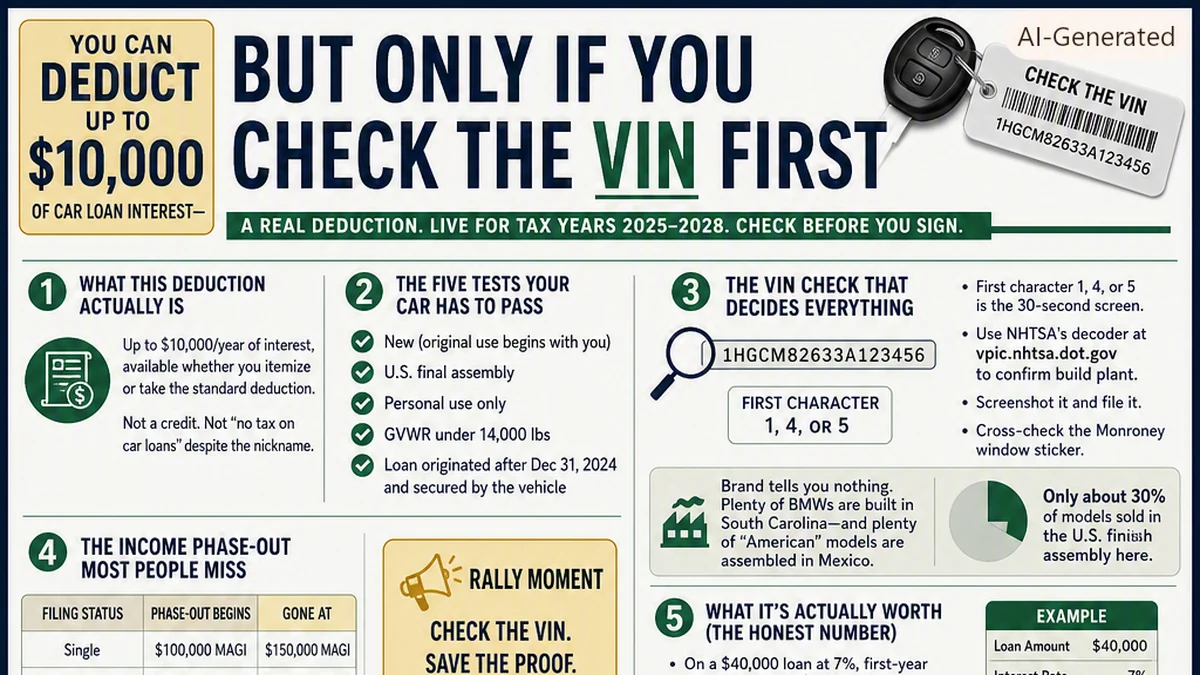
There's a real deduction for car loan interest on the books through 2028 — up to $10,000 a year, claimable even if you don't itemize. But only about 30% of models sold in the U.S. finish assembly here, and whether yours qualifies is decided by the VIN before you ever sign. Here's the 30-second check to run at the dealership, the income phase-out most people miss, and the honest math on what it's actually worth.
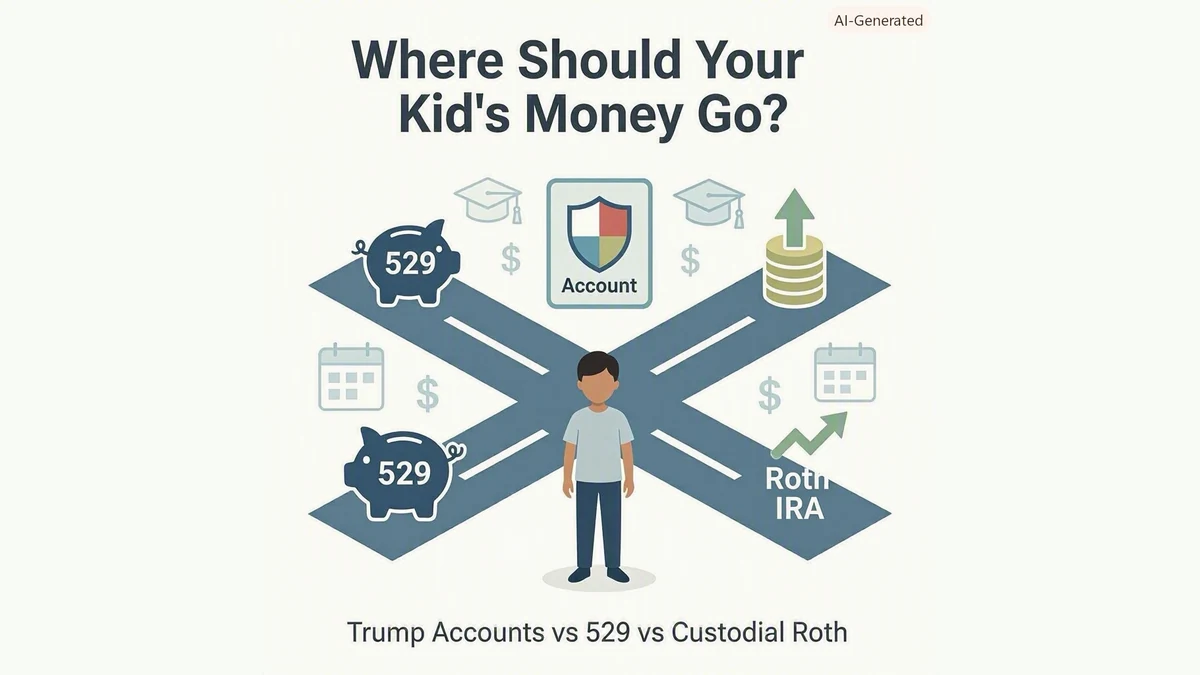
Trump Accounts launched July 4 with a free $1,000 attached — and every guide so far explains how to open one rather than whether you should actually fund it. Here's the honest three-way comparison against a 529 and a custodial Roth, including the tax detail buried under the launch coverage: Trump Account growth is taxed as ordinary income even when it pays tuition, while a 529 comes out tax-free. Take the $1,000 — then read this before you redirect your monthly savings.

The SAVE plan is over, and the deadline to switch isn't one national date — it's a rolling 90-day clock your servicer starts, and for many borrowers it's already running. Worse, interest has been quietly stacking onto SAVE balances since August 2025, so sitting in the forbearance has a real price. Here's how to find your personal deadline, compare RAP, IBR, and the new standard plans in plain English, and choose the right one before you get auto-enrolled into a bigger payment.

Every 'is Costco worth it' article is quietly written for a family of four — so we ran the actual break-even for a household of one. The answer comes down to two levers: whether you drive (10–30¢/gallon gas savings can cover the $65 fee on their own) and whether you can shift $30–40 a month of spending you already do. Plus: the food-waste trap that makes bulk buying backfire on singles, and the free Household Card trick that cuts the fee to $32.50.
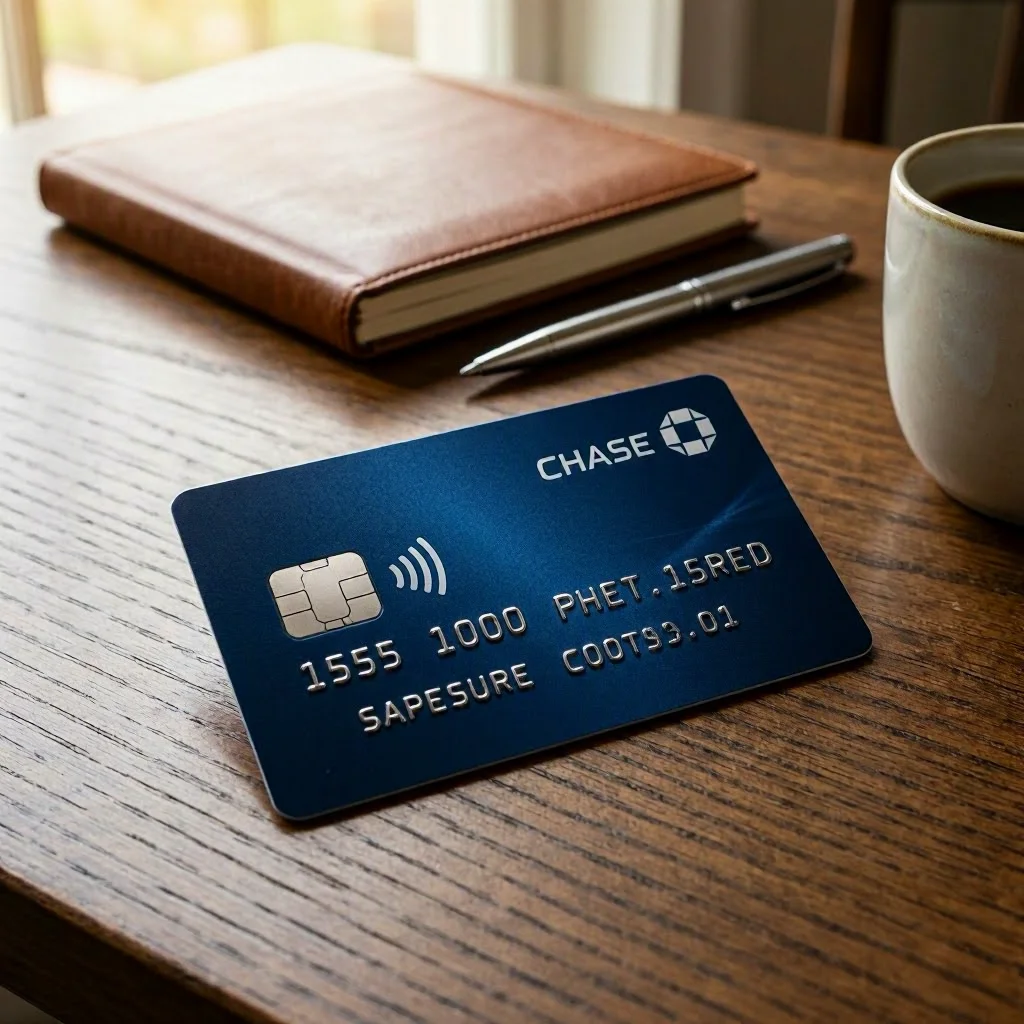
Chase is running the highest welcome bonus in the card's history — 100,000 points after $5,000 in spend, worth roughly $2,050 in travel — but it ends at 9 a.m. ET on July 30, 2026, then drops to 75,000. Here's the full 2026 breakdown: earning rates, the benefits most cardholders never activate (like primary car rental insurance), and an honest take on whether the $95 fee is worth it.
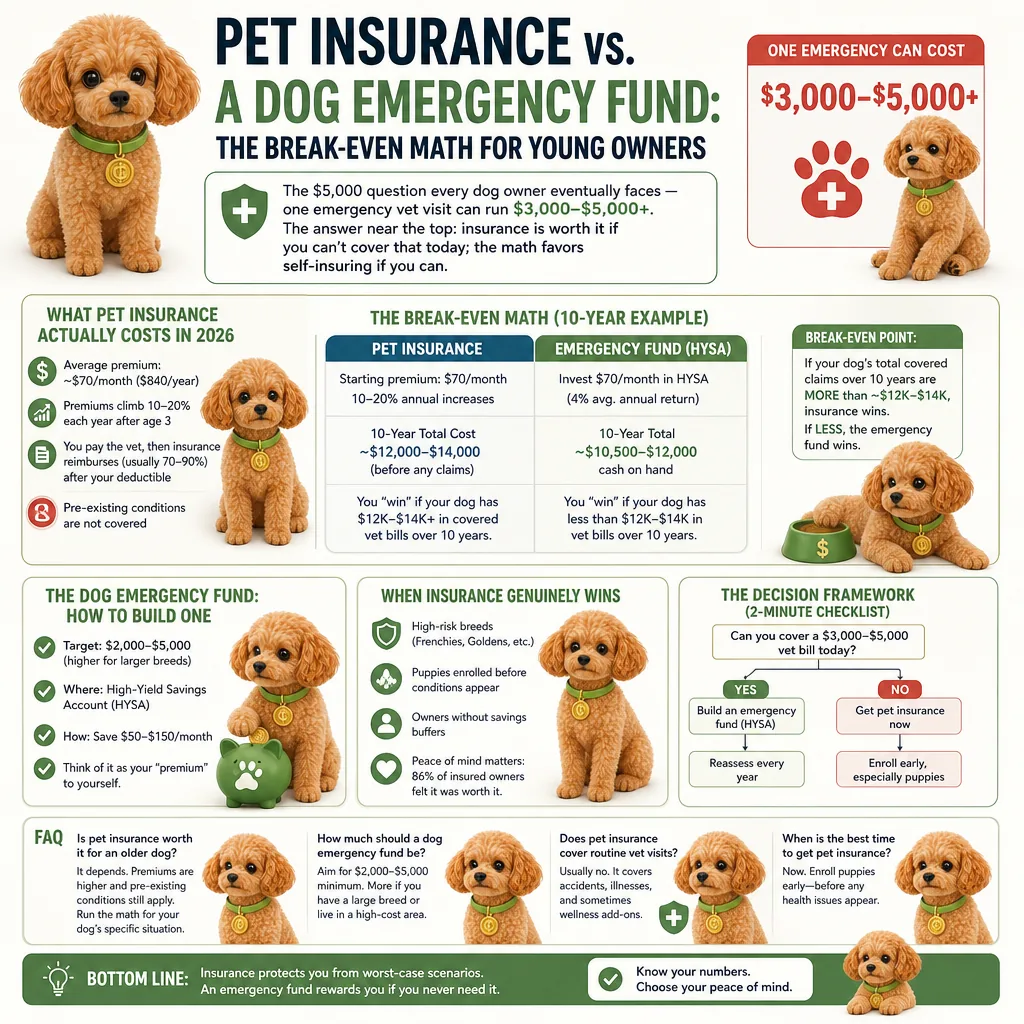
Every pet insurance review compares insurers against each other — almost none compare insurance against the alternative: a dedicated dog emergency fund earning interest in your name. We ran the actual 10-year break-even math, and the answer comes down to one honest question about a $4,000 vet bill. Plus: the exact cases where insurance genuinely wins, and how to build a dog fund that actually exists when you need it.

37% of Gen Z and 39% of millennials admit to "doom spending" — buying things they can't afford to cope with economic anxiety — and the Gen Z figure has already climbed to 41%. Here's what that habit is actually costing you in real dollars over time, and the five tactics that break the cycle without requiring more willpower.

Micro-retirements — career breaks of a month to a year, taken decades before 65 — are all over your feed, minus the math. Here's the formula for your number (a "three-month" break really costs about five and a half months of expenses once health insurance and the re-entry gap are priced in), the honest compounding cost of a year out of the market, and the funding plan that gets you there without touching your emergency fund.

A record 1 in 3 young adults now live with their parents — and 72% chip in financially with zero guidance on what's fair. Here's the three-anchor framework for landing on your number (cover your added costs, 10–30% of market rent, capped at 10–15% of take-home pay), plus the exact script for the kitchen-table conversation and the exit math that turns moving home into a launchpad.

Two-thirds of young adults want to start a side hustle — and the thing that stops most of them is money. But borrowing to fund an unproven idea is exactly backwards: the smartest hustles start for close to $0 and grow on their own earnings, not a credit card. Here's how to fund yours from cash flow, keep startup costs near zero, and launch in 30 days without taking on a dollar of debt.

You can pay rent on time for a decade and your credit score will never notice — most landlords simply don't report it. Rent reporting services fix that, with renters on thin credit files seeing an average 53-point boost within six months. Here's how rent reporting actually works, which credit scores count your rent (and which quietly ignore it), and the free routes to try before you ever pay a monthly fee.
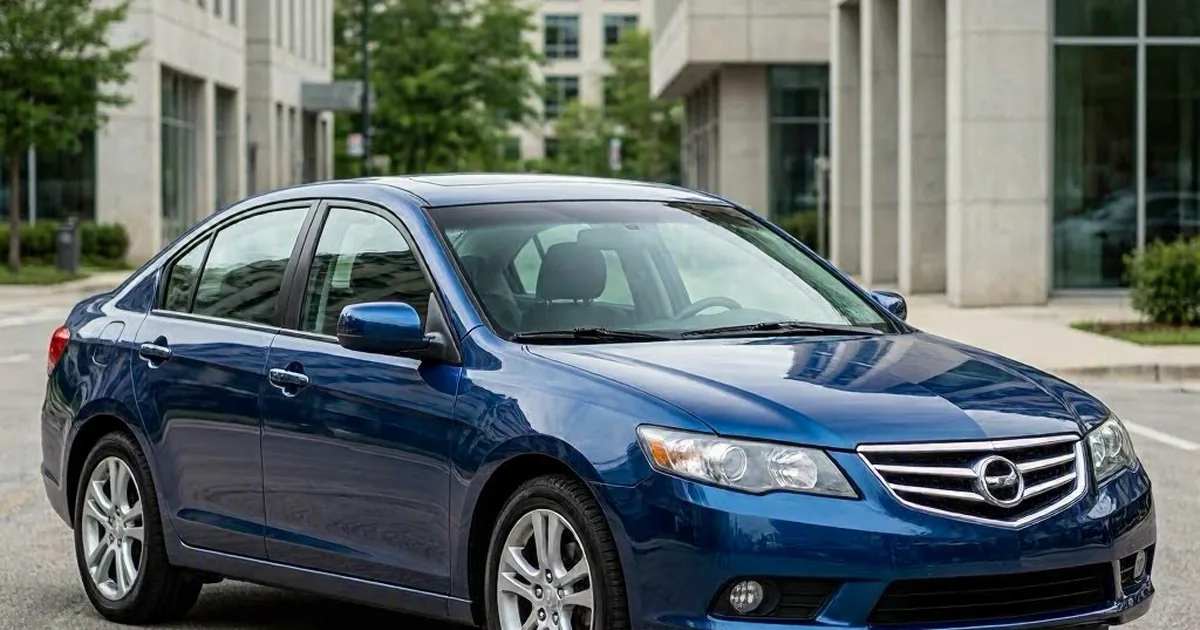
I bought my Acura TSX new in 2007 and never replaced it — and that one boring decision saved an estimated $52,000–$76,000 versus cycling through new cars. A car is a depreciating asset, but the money I never sank into one could be worth around $142,000 today if invested in an S&P 500 index fund. Here's the full breakdown.

Stadium beers run $9–$18 and hot dogs hit $10 — and a captive World Cup crowd is exactly where those prices climb the most. Here's how to eat for less without breaking a single rule at the gate: what FIFA's bag and food policy actually allows, and the money moves that beat the concession stand.

The Amex Hilton Aspire carries a $550 annual fee that scares people off — but I treat it like a stack of coupons, and a few of them quietly pay for the whole card. Here's exactly how I use the $50 quarterly airline credit, the semi-annual resort credit (it covered a night at Hilton Hawaiian Village in Waikiki), and the annual free night — which I cashed in at the Waldorf Astoria Monarch Beach last Valentine's Day.

Money dysmorphia is the gap between what your bank account says and what your gut believes — and 43% of Gen Z and 41% of millennials have it. Here's what's causing it, and the three-step reality check that closes the gap.

Most people pay full price for flights and hotels their entire lives without knowing there's a parallel system. Here's how the points economy actually works — and the single best first move to start earning free travel today.

Tariffs are adding an estimated $2,512 to the average household's costs in 2026. Here's a four-step framework to audit your exposure, build a buffer, and protect your savings rate — without starting your budget from scratch.

The 20% down payment is a myth — the typical first-time buyer in 2025 put down just 10%, and an entire layer of help most people never claim can shrink that even further. From FHA's 3.5% minimum to state grants worth up to $100,000, here's how down payment assistance actually works in 2026 and how to find the programs near you.

One saves more money. The other keeps you sane. Here's a side-by-side breakdown of both debt payoff methods — the pros, the cons, and how to figure out which one you'll actually stick with.
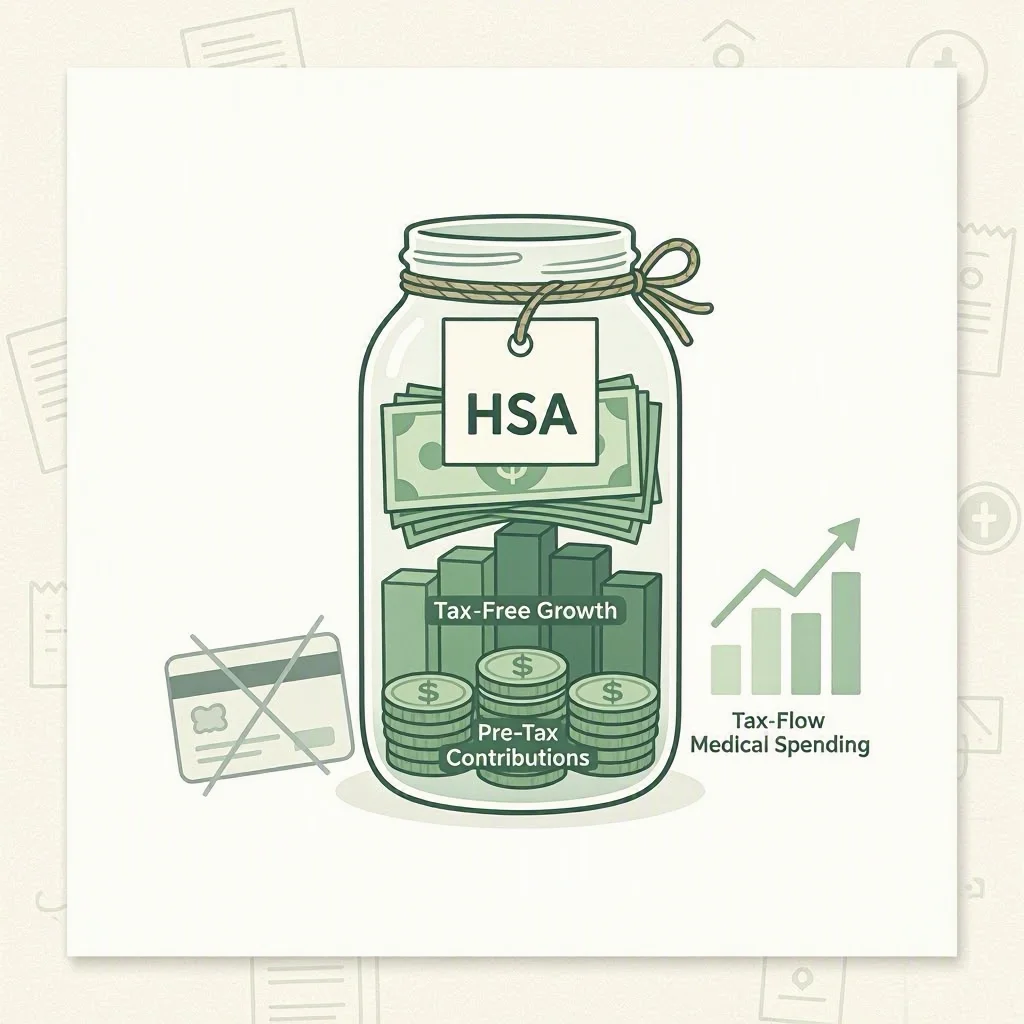
Your HSA is the only account that beats both a Roth IRA and a 401(k) on taxes — and most people treat it like a debit card for copays. Here's the triple tax advantage explained, the receipt trick that turns your HSA into a stealth retirement account, and how to get started in 10 minutes.

Buy Now, Pay Later makes a $180 purchase feel like $45 — and that's exactly the problem. Nearly 4 in 10 Gen Z BNPL users have missed at least one payment, yet the tool is genuinely useful when you use it right. Here's the one question to ask before you tap "pay in 4," three real-life scenarios that show when BNPL helps vs. hurts, and how it stacks up against the alternatives.
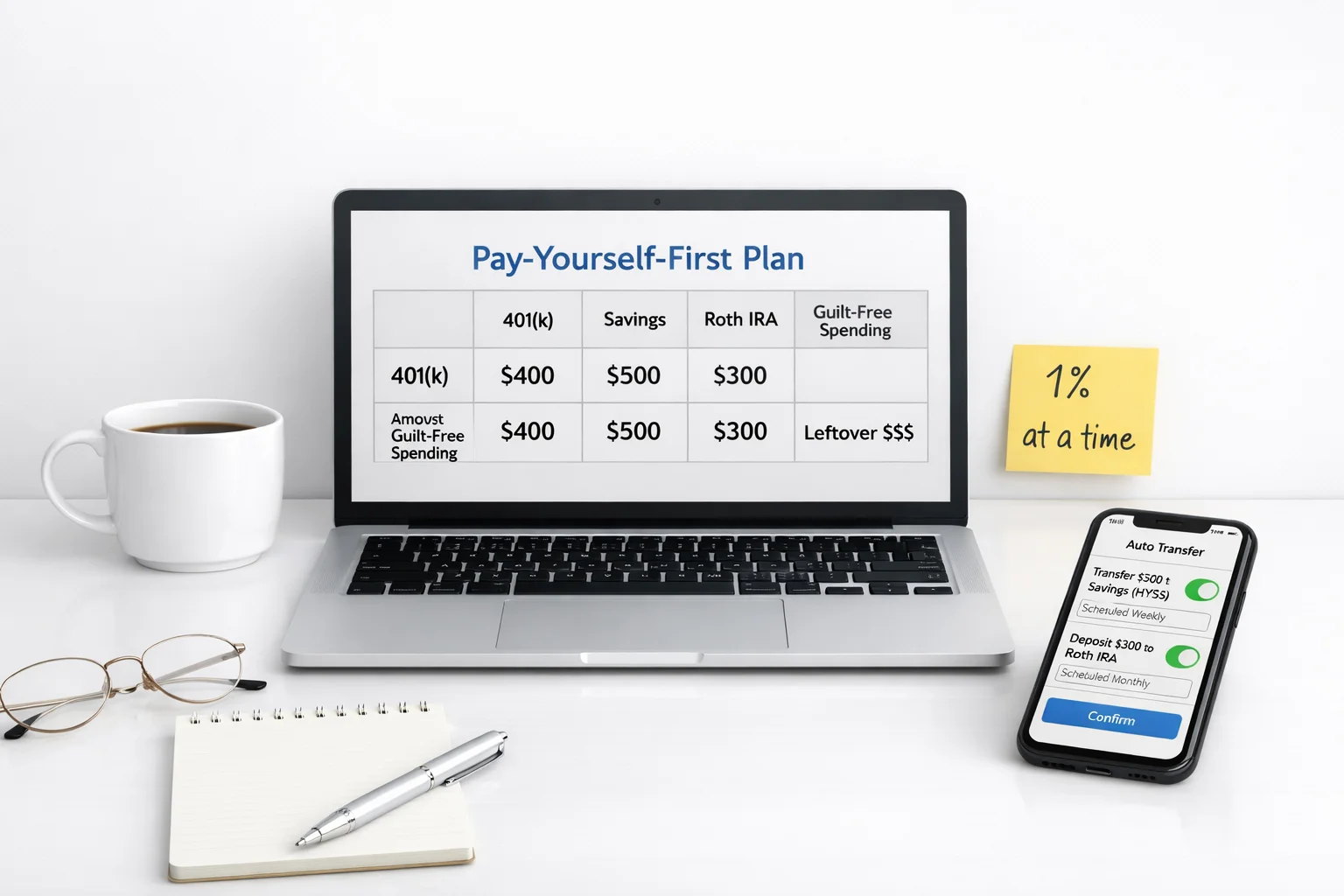
Most budgets fail because they rely on willpower. This one runs automatically — funding your 401(k) match, emergency savings, and Roth IRA before you see a dime — so whatever's left in your checking account is genuinely yours to spend without guilt.

The 3-to-6 month rule is just the starting point. Here's how to calculate the right emergency fund size for your actual life, where to keep it so it earns real interest, and how to build it even when money is already tight.

67% of Gen Z say a single paycheck is no longer enough — and 8.4 million Americans are already working multiple jobs to compensate. Income stacking isn't hustle culture; it's portfolio thinking applied to how you earn. Here's the practical framework to build multiple income streams without running yourself into the ground.

Most people know they should be saving for retirement — they just don't know which account to use first. Here's the 2026 contribution limits, three real salary examples, and the one three-step rule that makes the Roth IRA vs. 401(k) decision easy.
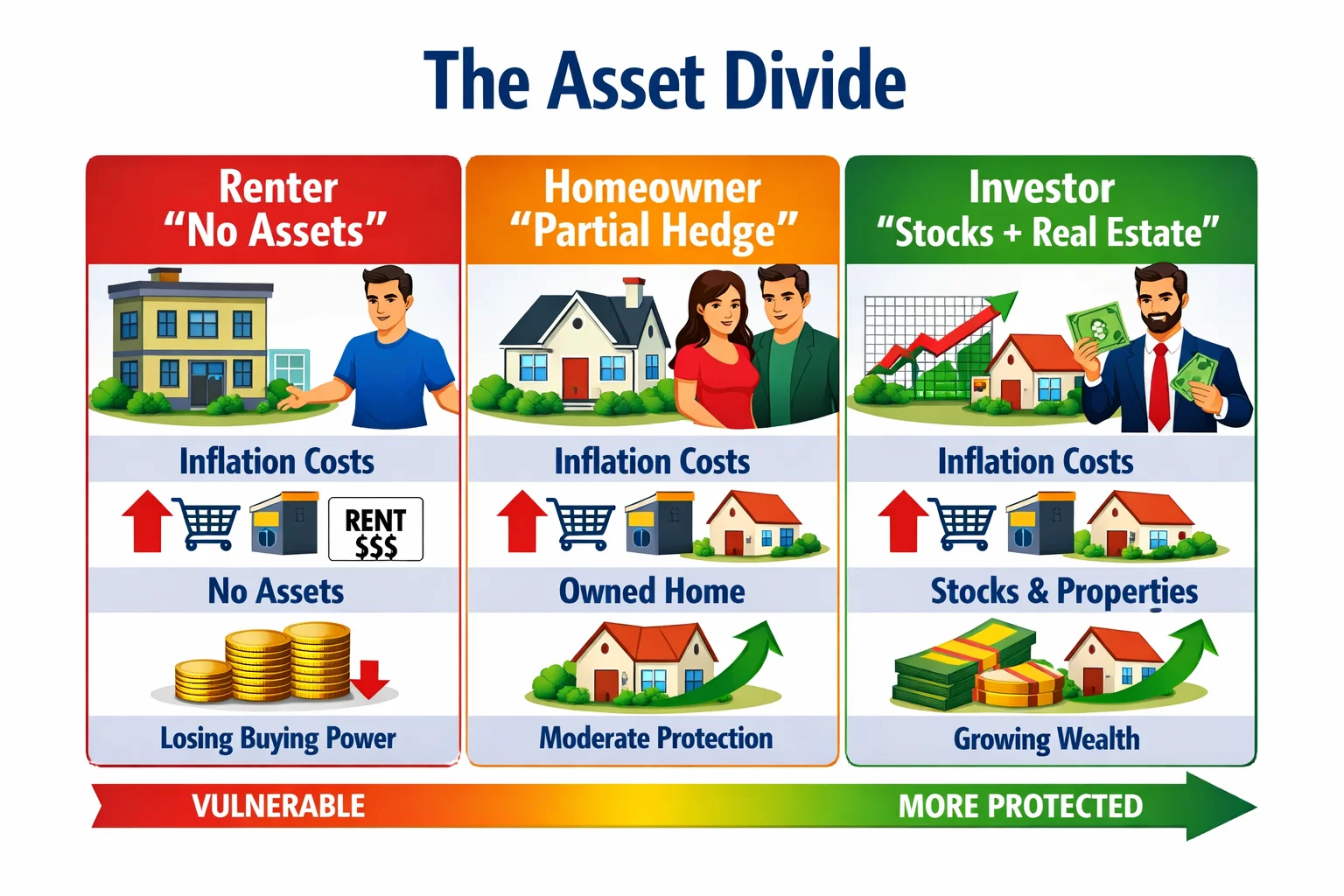
It's not income, hustle, or luck — it's the structural advantage of owning investable assets. Here's the real math on how assets act as an inflation hedge in every economic environment, and what the wealth divide actually looks like across net worth levels.

Most people pick one card and call it a day — but that's leaving serious points on the table. Here's a look at my card wallet lineup and how I've assigned each card a specific job to maximize every dollar I spend.
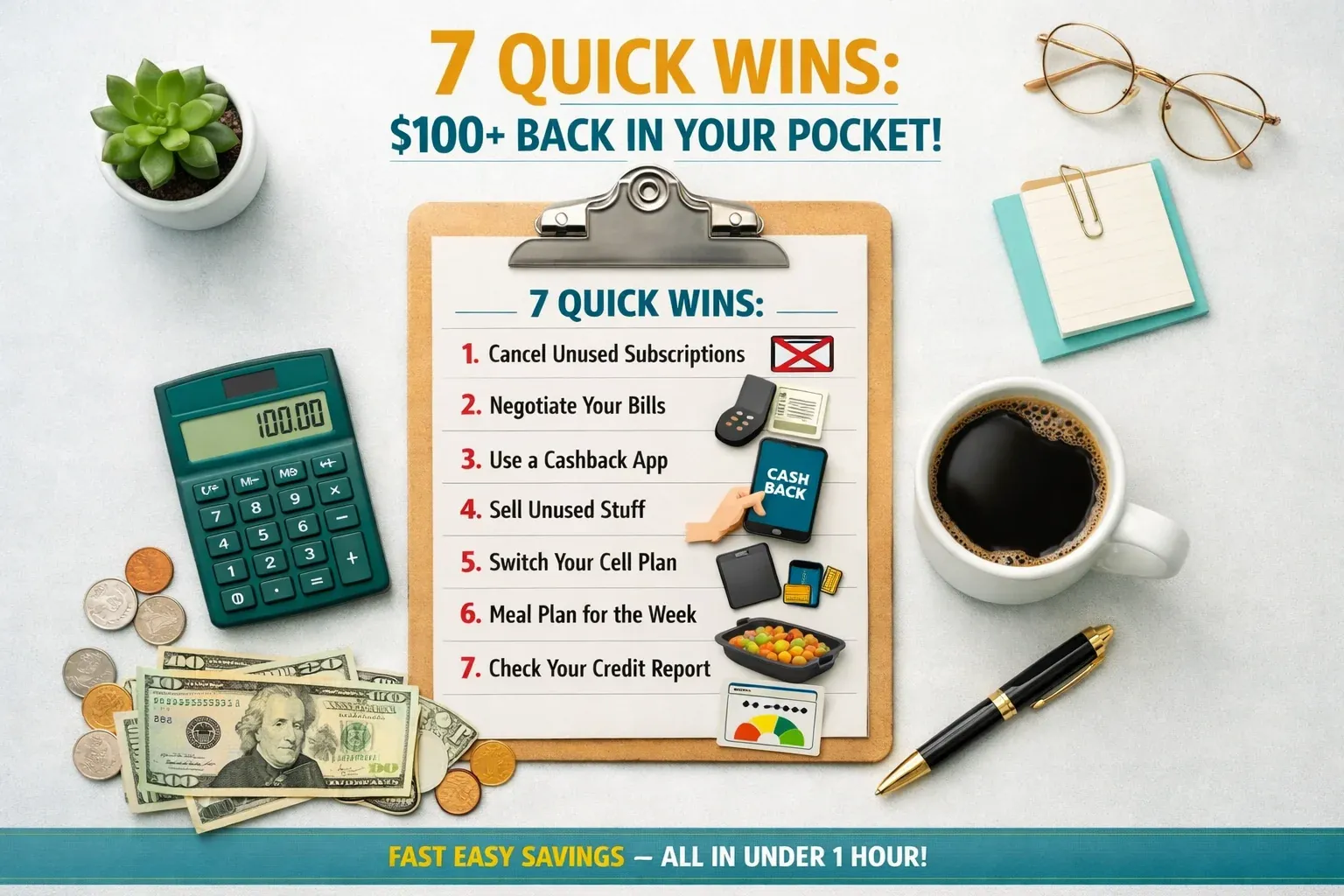
Seven moves, ranked from fastest to longest — open a high-yield savings account, switch to a discount carrier, claim your 401(k) match, and more. Start at the top and stop whenever you run out of time; you'll still come out ahead.

Nobody warns you about the vet bills, the boarding fees, or the things they chew through. Here's an honest look at what dog ownership actually costs — and why, if you ask Tokki (the real dog behind our mascot Rally), every dollar is worth it.

Nearly half of millennials have had a panic attack over their finances — and Gen Z isn't far behind. Financial anxiety is real, documented, and running in the background for millions of people right now. Here's why your generation has it harder, what chronic money stress actually does to your body, and five concrete moves that reduce it.

You'd need $118,530 in household income to afford the median U.S. home in 2026 — but median Gen Z income is just $84,000. That gap is real, but it's not the end of the story. Here's the honest breakdown of what housing actually costs right now, where buying is still cheaper than renting, and three concrete paths people are using to move forward.

71% of millennials now say a side hustle is required just to keep up — but most 'side hustle ideas' lists skip the most important question: which one actually fits your life? Here's a practical framework to identify your constraint type, match it to the right hustle category, and run a two-week test before you commit.

The Capital One Venture X charges $395 a year — but a $300 travel credit and 10,000 anniversary miles quietly cover that fee before you board a single flight. Here's an honest breakdown of the benefits, travel partners, and the one catch that matters if you're adding a second cardholder.

Booking flights for four doesn't have to cost four times as much. Here's how families can pool points, pick the right card, and book award travel for everyone — without a massive points balance.

Most budgets fail because they treat everything you enjoy as the enemy. Joy-based budgeting flips that — it starts with the spending that genuinely makes your life better, automates your savings, and cuts the stuff you don't even notice you're paying for. Here's a simple, three-step framework to build one.

Most new grads expect to earn around $80,000 a year after graduation. The actual average starting salary? $56,153. That $24,000 gap doesn't have to derail you — but it does mean your financial plan needs to start with your real numbers, not the ones you imagined. Here's how to build solid footing from your very first paycheck.

Over 60% of millennials and Gen Zers are already using AI to help manage their money — but most people walk in without knowing what these tools are actually good at. From surfacing forgotten subscriptions to building a first budget from scratch, here's an honest look at what AI budgeting tools do well and where they fall short.

72% of Americans now earn side income — but most hustlers never calculate their real hourly rate. Here's a simple framework to figure out whether your hustle is moving your finances forward, or quietly draining more than it's worth.

The Amex Marriott Bonvoy Brilliant costs $650 a year — but between complimentary breakfasts in Osaka and Honolulu, a free night at Turtle Bay Resort on Oahu's North Shore, and a $300 dining credit, it paid us back over $1,400 last year alone. Here's the full breakdown.

Real estate investing offers something the stock market can't: the ability to build wealth using borrowed money, with a tenant essentially paying down your mortgage while rents rise with inflation. But it comes with real responsibilities — from tax advantages and steady income to the realities of dealing with tenants and surprise repair bills. Here's an honest look at both sides before you buy.

Airfare is expensive this summer — but we're flying roundtrip from Southern California to Seattle and staying four nights at a Hyatt House for $0 out of pocket. Here's the exact Capital One and Chase points strategy we used, including the math on why booking through the travel portal means you end up spending fewer miles than you'd expect.
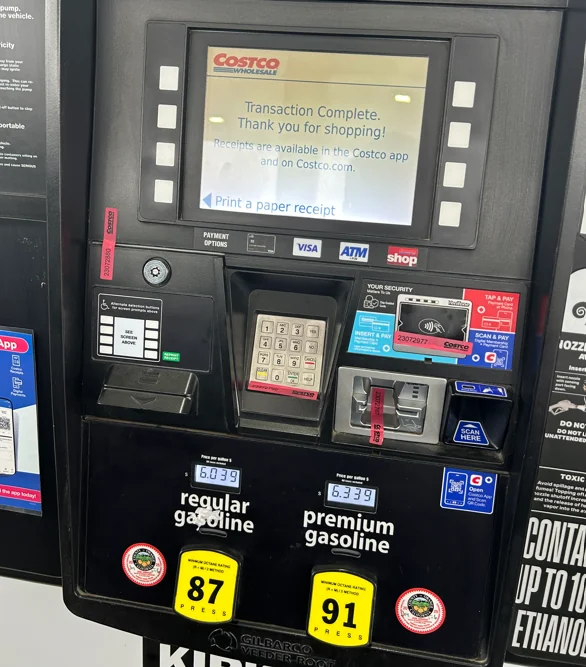
Gas prices have climbed to painful levels — but most drivers are still filling up the expensive way. By choosing the right base strategy, layering on cash back apps like Upside, and pairing it all with the right credit card, you can cut 30–50¢ or more off every gallon without changing your routine.

Splitting the check shouldn't be this complicated — yet somehow it always is. This post names the real tensions behind group dining, the recurring characters we all recognize, and the apps and scripts that make it genuinely less awkward.

Your paycheck rewards your hours. Your investments reward your patience — and the math, tax code, and power of compounding all stack in the investor's favor. Here's what happens when you compare $100,000 in W2 salary to $100,000 invested in the S&P 500 over 10 years.

Groceries are the frontline of inflation — and by stacking your store's digital coupon app, the right credit card, and a receipt-scanning app like Fetch or Ibotta, you can consistently get 15-20% back on the same groceries you're already buying.

Restaurant prices have never been higher — stacking credit card rewards with cash back apps like Franki and Seated can put up to 26% back in your pocket on every meal.

Business class to Tokyo is hitting $5,000+ in 2026 — but with the right points strategy, you can book that same seat for under $500 out of pocket. Here's exactly how to do it.
Most people think building wealth requires constant attention, hot stock tips, and financial expertise. It doesn't — it requires a simple, automated system you set up once and let run. This is that system, distilled to one page.