🔗 Heads up: Some links in this post are referral links. If you apply or sign up through them, I may receive a commission — at no extra cost to you. I only recommend products I genuinely believe in.
⚠️ Not financial advice: This post is for educational purposes only. I'm not a licensed financial advisor. Please do your own research and consult a professional before making any financial decisions.
🤖 This article was produced with AI assistance and reviewed by our editorial team.
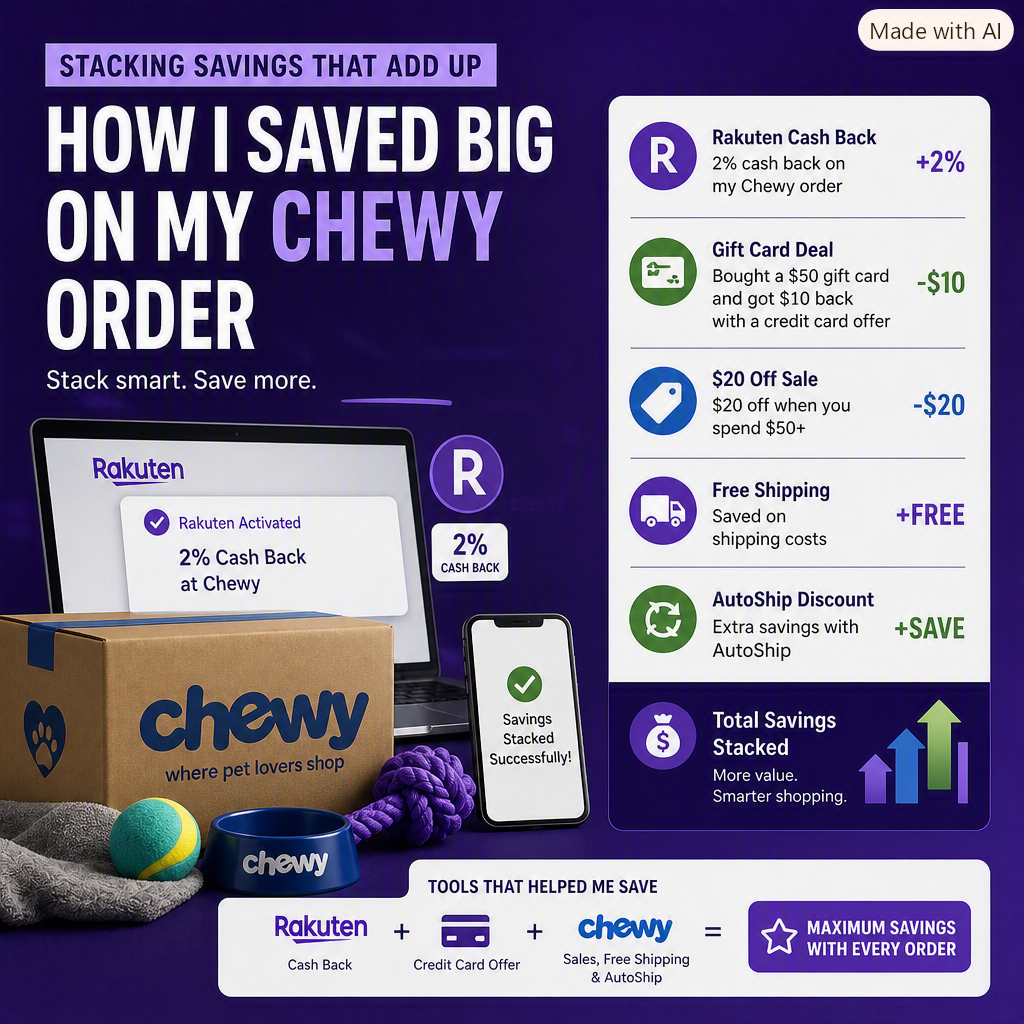
Every November, the internet treats the sale price like the finish line. It isn't. The sale is just the first discount, and it's the one every other shopper gets too. The people who come out ahead on Black Friday get paid back two more times on the same purchase: once by a cash back portal, and once by the card they check out with.
That's a stack: independent discounts layered on one purchase, where no layer cancels another. None of it takes coupon-clipping energy. It takes about 20 minutes of setup in October, and then it runs on autopilot through the holidays.
What a Stack Actually Is
Think of every online purchase as having three separate places money can come back to you:
- Layer 1 — The store: the sale price, promo code or coupon. This is the discount you already know about.
- Layer 2 — The portal: a cash back site pays you a percentage of what you spent, because the store paid them a commission for sending you there.
- Layer 3 — The card: your credit card earns rewards on the final charge, no matter where it happens.
The layers don't know about each other, and that's the whole trick. The store doesn't care which card you use. The card issuer doesn't care whether you came through a portal. So each one pays out in full.
Rally's take: if you're going to buy the chew toy anyway, you might as well get paid three times for it. 🐩
Layer 2: Set Up the Portal Before the Rush
The portal I use is Rakuten. It's free, it covers thousands of retailers, and its browser extension pops up at checkout so you don't have to remember to click through. When you shop through Rakuten, a percentage of your pre-tax purchase comes back as cash.
Holiday timing matters here. Portal rates aren't fixed. They rise and fall with what retailers are willing to pay, and around Black Friday and Cyber Monday many stores temporarily boost their rates, sometimes doubling them. A store that normally pays 3% might show 6% or more for a few days. Check the rate on the day you buy, not the week before.
The three rules that keep your cash back from disappearing
- Start the shopping trip through the portal. Click through Rakuten (or activate the extension) before you add items to your cart, and finish in the same browser session.
- Turn off your ad blocker for that tab. Ad blockers can strip out the tracking link that tells the store you came from the portal.
- Only use codes listed on the portal. Codes you find on random coupon sites can override the portal's tracking. Codes on the store's own site or on the Rakuten store page are generally safe.
Cash back isn't instant. It shows as "pending" while the store's return window runs, then gets paid out on Rakuten's quarterly schedule (as of September 2026), by PayPal or check. Holiday purchases usually land in the first quarterly payment of the new year, which makes it a nice surprise in February.
Layer 3: Pick the Card That Works Everywhere
For holiday shopping, a flat-rate card usually beats a rotating-category card. Rotating cards pay 5% only in whatever categories the issuer picks each quarter, and Q4 categories don't always include general retail. If your 5% is on restaurants in November, it does nothing at Target checkout.
A flat-rate card pays the same rate on everything. The one in my wallet for this is the Capital One Venture. It earns 2 miles per dollar on every purchase, with nothing to activate and no categories to track (as of September 2026). Each mile is worth 1 cent when you use it to erase a travel purchase from your statement, so that 2x works out to about 2% back toward travel. The Capital One Venture carries a $95 annual fee, so it makes the most sense if you'll put regular spending on it all year, not just in November.
If you already carry a travel card, check its rate on general purchases before you commit. Many premium cards earn big on dining and travel but only 1x on everything else, which is half of what a flat 2x card earns at a retail checkout.
The Stack in Action: One $300 Cart
Here's a single realistic example, start to finish. Say you're buying holiday gifts from a department store's website: a coat, a pair of sneakers and a couple of stocking stuffers.
- List price: $400
- Layer 1 (store sale, 25% off): −$100 → you pay $300 before tax
- Sales tax (8%): +$24 → card charge of $324
- Layer 2 (Rakuten at an estimated 5% average holiday rate, paid on the $300 pre-tax amount): $15 back
- Layer 3 (Capital One Venture, 2x on $324): 648 miles ≈ $6.48 toward travel
Layers 2 and 3 return about $21.48 combined, so your true cost is roughly $302.52 for $400 worth of stuff. That $21 is money the "just grab the sale" shopper left on the table. Run the same habit on $1,500 of holiday spending and you're looking at roughly $100 back, all from purchases you were making anyway.
One honest note: 5% is an estimated average, not a promise. Rates vary by store, and some retailers boost well above that on Black Friday while others sit at 1–2%. Even at 2%, this cart still returns about $12.50 across both layers, which is not bad for a click.
Where Stacks Break
Stacks are simple, but a few common moves quietly zero out a layer:
- Buying gift cards. Most retailers exclude gift card purchases from portal cash back. Check the store's terms on the portal page.
- Checking out with PayPal or a "buy now, pay later" button. Some stores won't credit portal cash back when you pay through a third-party wallet. When in doubt, enter your card directly.
- Returns. If you return an item, the cash back for it is reversed, and so are the card rewards. That's fair, but don't count pending cash back as money you have yet.
- Carrying a balance. This is the big one. A 2% card reward means nothing next to a 20%+ interest rate. If you can't pay the full statement balance when it's due, every layer of this stack is erased by interest within a month. Budget the gift money first, then use the card as a payment method, not a loan.
Your Pre-Black Friday Checklist
Do these five things in October and November will run itself:
- Set a total gift budget and write down who you're buying for. The stack only saves money if the spending was planned.
- Join Rakuten and install the browser extension on the browser you actually shop with.
- Pick your checkout card. Check its rate on general retail. If it's only 1x, a flat 2x card like the Capital One Venture may be worth a look.
- Make a price list now. Note today's prices on the items you want, so you can tell a real Black Friday deal from a fake markdown.
- Save your receipts and order emails until the cash back shows as paid. If a purchase doesn't track, you'll need them to file a missing cash back claim.
Frequently Asked Questions
Is Rakuten legit, or is there a catch?
It's legit. Rakuten is a free service that earns a commission when it sends you to a store, and it shares part of that commission with you. The catch is mostly patience: cash back is paid quarterly, not instantly.
If I return something, do I lose the cash back?
Yes, for the returned item. The portal reverses cash back on returned purchases, and your card issuer reverses the rewards when the refund posts. Items you keep aren't affected.
Can I use a store coupon and still get portal cash back?
Usually, yes, as long as the code comes from the store itself or is listed on the portal's store page. Codes from third-party coupon sites or browser extensions can override the portal's tracking, so stick to official sources.
Set Up Layer 2 Before November
Rakuten is free to join and takes about two minutes to set up. Get it installed now so it's ready when the Black Friday rates go live.
Join Rakuten →