⚠️ Not financial advice: This post is for educational purposes only. I'm not a licensed financial advisor. Please do your own research and consult a professional before making any financial decisions.
🤖 This article was produced with AI assistance and reviewed by our editorial team.
The no-awkward way to get paid back is to ask once, early, with a specific amount and a specific date, in the same app you want the money sent through. Vague hints like "no rush, whenever!" are what turn a $400 IOU into a six-month standoff. This method takes about 10 minutes and three short texts.
You're not the only one stuck holding the bill. A Zelle survey reported by Fortune in July 2026 found that 46% of Gen Z owe friends or family more than $1,000, and 47% of Gen Z have gone into debt covering a group expense they expected to be repaid for. The research was run for Zelle by Accelerant Research in May and June 2026 (1,000 Americans plus 1,000 frequent Zelle users), so treat it as a snapshot rather than a census. But the pattern matches what most of us have lived: you book the trip, everyone says "I'll Venmo you," and then it gets quiet.
Why you ended up as the group's bank
It's rarely about greed. According to Zelle's own release, only 28% of people who sometimes borrow for shared expenses pay back the same day, and 76% of Gen Z who fronted group money say they weren't fully repaid. 55% say it created tension or hurt a relationship, and 20% of Gen Z have canceled plans or muted or ignored a group chat to avoid paying someone back.
Financial therapist Dr. Traci Williams, a paid Zelle partner, told Fortune that groups often skip agreeing on repayment terms up front, so the organizer ends up absorbing the cost. In her words, "It's really uncomfortable to have money conversations with people that you're close to." That discomfort is the real problem, and it's fixable. If the stress of it is bigger than the dollar amount, our post on the money and mental health link has five practical moves for it.

Rally's two cents: "I've watched a group chat go silent the second the Airbnb split showed up. Meanwhile, nobody has ever muted the treat jar. If you're owed money, ask the way I ask for a treat: directly, at the right time, and with eye contact. It works every time."
The 10-minute triage: what are you actually owed?
Before you text anyone, get the full picture. Open your payment app history, your group chats and your receipts, and list every open IOU: who, what for, how much and when. Then sort each one into a bucket.
- Probably forgot: small or older amounts that got buried in a chat. These need a friendly nudge.
- Avoiding it: bigger amounts or ones that have already been mentioned once. These need a specific ask with a date.
- Let it go: amounts you'd honestly rather lose than argue over. Decide that now, on purpose, so it stops nagging you.
Here's a worked example with three IOUs that add up to $1,000:
| Who | What for | Amount | Bucket |
|---|---|---|---|
| Alex | Beach trip share | $500 | Avoiding it |
| Jamie | Birthday dinner | $400 | Probably forgot |
| Taylor | Gas and tolls | $100 | Probably forgot |
| Total | $1,000 |
Two of the three are likely just buried in a group chat. Only Alex needs the harder conversation, and it's one text, not a confrontation. These names and amounts are an example, not data.
Three texts that work (copy and change the numbers)
Each script does the same three things: it names the amount, it gives a date, and it makes paying easy. Send a real payment request through Venmo, Cash App, Zelle or whatever app you share, not just a text, so paying takes one tap.
1. The friendly first nudge (Taylor, $100)
"Hey Taylor! Looks like the gas and tolls from the lake trip never got settled. Your share was $100. I just sent a request so it's one tap. Could you take care of it by Sunday?"
2. The specific follow-up, a week later (Jamie, $400)
"Hey Jamie, circling back on the birthday dinner. Your half was $400 and I'd love to close this out. I resent the request just now. Can you send it by Friday? If that's tight, tell me what works and we'll sort it out."
3. The payment-plan offer (Alex, $500)
"Hey Alex, I know the trip was a big month. Let's make this easy: $350 now and the last $150 on the 15th. I'll send the first request today. Does that work?"
That last script matters most. People avoid paying when the full amount feels impossible, so a plan with a first payment and a final date gets you money sooner than waiting for a lump sum. Notice that none of these scripts apologize. You're not asking for a favor. You're closing out something that was already agreed.
Make it easy to pay you, and stop it from happening again
Collecting is easier if the next IOU never forms. Four habits cover most of it:
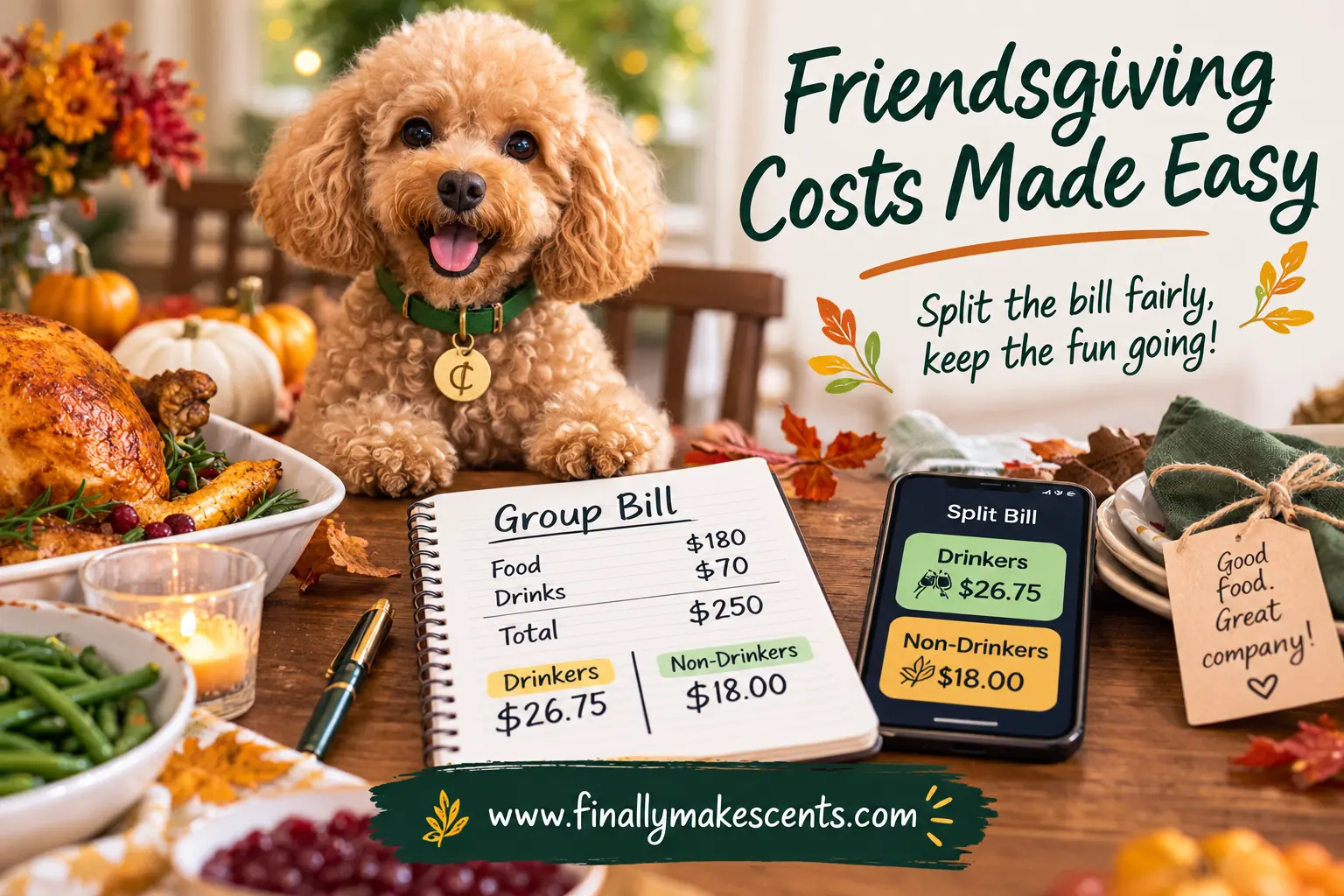
- Set the terms before you pay. "I'll book it, send me your share by Friday" takes five seconds and saves weeks. Our Friendsgiving cost-splitting guide uses the same principle.
- Request within 48 hours. This is another rule of thumb of ours, not a study result, but a payment request sent while the memory is fresh gets paid faster than one sent a month later.
- Pick a number you'll front. This is my own rule of thumb, not an official one: if you can't comfortably lose it, ask for the money before you book. For restaurant bills, splitting the check without the awkwardness works the same way.
- Let one person organize. When everyone assumes someone else is collecting, nobody does.
When to stop chasing
Here's a simple rule. After two specific asks with dates, plus one real conversation by phone or in person, decide which of three things you're doing: set up a payment plan, keep the friendship and write the money off, or escalate. Staying in the middle, quietly annoyed, costs the most.
One tax note, since people ask. According to the IRS's bad debt guidance (Topic 453), a nonbusiness bad debt is deductible only when it's totally worthless, it was a genuine loan rather than a gift, and you can show reasonable steps to collect it. It's reported as a short-term capital loss on Form 8949. If you lent money to a friend with an understanding they might not repay, the IRS treats it as a gift. For most casual IOUs, that means writing it off for your own peace of mind rather than your tax return. For large amounts, ask a tax professional.
Frequently asked questions
Is it rude to ask a friend to pay me back?
No. Asking once, early, with an amount and a date is normal, and it's kinder than letting resentment build. Financial therapist Dr. Traci Williams (a paid Zelle partner), quoted by Fortune, ties the problem to discomfort with money conversations rather than carelessness, and Scripps News reports she recommends giving a deadline, such as the end of the week.
What if my friend ghosts me after I ask?
Send two specific requests a week or so apart, then switch to a call or an in-person conversation and offer a payment plan. If that fails, small claims court exists for money owed between individuals, but filing limits and fees vary by state, so check yours first. Most people decide the friendship matters more and write it off.
What if I'm the one who owes someone money?
Tell them your plan before they ask. Something like "I owe you $400. I can send $100 today and $100 on the 1st of each month until it's done" works far better than silence. In the Zelle survey, 20% of Gen Z had canceled plans or muted or ignored a group chat to avoid paying someone back, and that tends to make things worse.
Should I charge my friend interest?
For friend-sized IOUs, most people don't, and adding interest can make a favor feel like a formal loan. If the amount is large, put the amount, due date and payment schedule in writing and ask a tax professional about the IRS rules for personal loans.