🔗 Heads up: Some links in this post are referral links. If you apply or sign up through them, I may receive a commission — at no extra cost to you. I only recommend products I genuinely believe in.
⚠️ Not financial advice: This post is for educational purposes only. I'm not a licensed financial advisor. Please do your own research and consult a professional before making any financial decisions.
If you've tried to book a flight this summer, you already know: airfare is rough right now. Fuel prices have been climbing steadily, airlines are passing those costs along, and domestic routes that used to feel reasonable are quietly approaching prices that make you do a double-take. A roundtrip from Southern California to Seattle — not exactly an international haul — is comfortably running $350 to $500 per person during peak summer travel.
My wife and I are still going. We booked the trip weeks ago, and between the two of us, we're spending exactly zero dollars on flights and four nights of hotel. This isn't magic, and it's not some convoluted trick that only works for people who spend hours a week on travel forums. It's a straightforward two-card strategy using the Capital One Venture Card and the Chase Sapphire Reserve — two cards we use for everyday spending anyway — and it works precisely because of the high-cost environment everyone is complaining about. (If you're newer to the points system and want to understand how it all works before diving into this example, start with our Travel Hacking 101 guide first.)
The Airfare: Making the Capital One Venture Card Do the Heavy Lifting
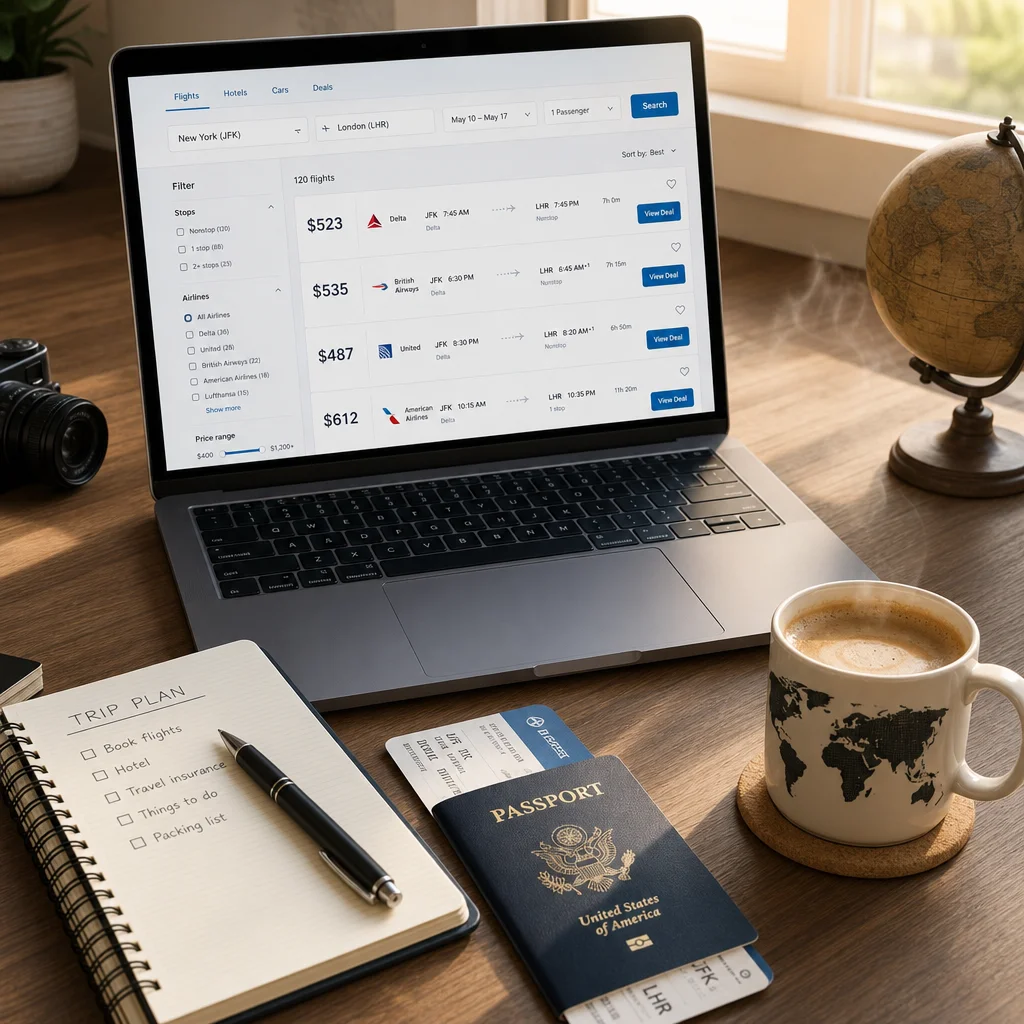
The flights were $317 roundtrip per person — so $634 total for both of us. Not the cheapest fares we've ever seen on this route, but a solid find given where summer prices are sitting. Here's where the Capital One Venture Card starts doing its job.
We booked through the Capital One Travel portal, which did two things for us simultaneously: it activated the card's $300 annual travel credit, and it earned us 5x miles on the purchase — a boosted earn rate you only get when you book through the portal. That combination is where the real value stacks up.
The key insight here is that booking through the portal doesn't just unlock the travel credit — it actually reduces the number of miles you need to spend. Because you earn 5x miles on the portal purchase, a portion of what you redeemed comes right back to you. Instead of spending 63,400 miles to cover the full $634 cash fare without any credits, we covered the same trip using our $300 credit plus just 31,730 net miles. The portal multiplier offsets roughly 1,670 miles from the redemption, making the math meaningfully more efficient.
The $300 travel credit is the anchor of this strategy. If you're holding a Capital One Venture Card and not routing your travel bookings through the Capital One portal, you're leaving one of the card's most valuable annual benefits on the table. The credit resets every year — use it every year.
The Hotel: Four Nights at Hyatt Regency Lake Washington for Zero Dollars
Flights handled, we turned to the hotel. The Hyatt Regency Lake Washington at Seattle's Southport is a waterfront property on Lake Washington in Renton — lake-view rooms, an indoor pool, a full spa, and lakeside dining at Water's Table. Cash rates are running $300–$350 per night for our dates — so four nights would have cost us somewhere between $1,200 and $1,400. We paid none of it.
The Chase Sapphire Reserve earns Ultimate Rewards points, and one of the most valuable things you can do with those points is transfer them directly to World of Hyatt at a 1:1 ratio. The Hyatt Regency Lake Washington falls into the award chart tier that prices a standard room at 15,000 points per night.
Earn Chase Ultimate Rewards on everyday spending
The Chase Sapphire Reserve earns 3x points on travel and dining — two categories we spend in regularly. Those points accumulate in your Chase account until you're ready to use them.
Transfer Chase points to World of Hyatt (1:1)
In your Chase account, navigate to "Transfer Points" and move 60,000 Ultimate Rewards points to your World of Hyatt account. Transfers are instant and permanent — so confirm your award nights before moving the points.
Book 4 standard award nights at 15,000 points each
Log into your World of Hyatt account and search for standard award availability. At 15,000 points per night, 4 nights cost exactly 60,000 Hyatt points — which is exactly what you just transferred. Total cash at checkout: $0.
Enjoy a lakefront hotel that would have cost $1,200–$1,400 in cash
60,000 Chase points covering 4 nights at the Hyatt Regency Lake Washington at $300–$350/night represents approximately $1,200–$1,400 in value — a redemption rate of 2–2.3 cents per point, which beats the 2 cents per point that travel experts typically benchmark Chase points at. You're getting more than full value out of every point transferred.
Always confirm availability before transferring. Chase points moved to Hyatt cannot be returned. Search Hyatt.com for standard award availability on your exact dates first — then transfer the points once you've confirmed the room is bookable.
The Full Trip Breakdown
Here's the complete picture — what each piece of the trip would have cost at cash rates versus what we actually spent:
| Expense | Cash Rate | What We Paid | How |
|---|---|---|---|
| Flights (2 roundtrips) | $634 | $0 | $300 travel credit + 31,730 Capital One miles |
| Hotel (4 nights) | ~$1,200–$1,400 | $0 | 60,000 Chase points → World of Hyatt |
| Total Trip | ~$2,000+ | $0 cash | 31,730 Capital One miles + 60,000 Chase points |
To put it plainly: over $2,000 worth of travel, covered entirely by points and an annual credit we were going to get regardless. The miles and points we spent were earned through normal, everyday spending on these two cards — not manufactured spend, not anything unusual.
Why This Works Better in a High-Airfare Environment
Here's something counterintuitive: rising airfare actually makes points more valuable, not less. When cash fares climb, the gap between what you'd pay out of pocket and what an award redemption costs stays fixed. The hotel isn't charging you more points because fuel prices went up — 15,000 Hyatt points per night is 15,000 Hyatt points per night. The award chart doesn't care about inflation.
At the same time, the 5x portal multiplier on the Capital One Venture Card means that when fares are higher, you actually earn more miles back on the portal purchase — which marginally offsets what you spend on redemptions. As cash prices rise, the system rewards you more for using it correctly.
This isn't meant to be a brag — it's meant to be a template. Both of these cards have been part of our regular wallet for a while now, and the points we used on this trip were accumulated through groceries, dining, gas, and the occasional Amazon order. No special trips, no unusual behavior. Just routing the spending we were already doing through cards that actually reward it.
The two-card setup in plain terms: The Capital One Venture Card handles flights and covers the $300 annual travel credit. The Chase Sapphire Reserve handles hotel nights via the Chase → Hyatt transfer. Together, they cover both major trip expenses without touching your cash.
We'll be in Seattle this summer while a lot of people either stay home or take on the full cash cost of the trip. The cards that made that possible aren't anything exotic — they're two of the most widely available travel cards out there. The difference is just knowing how to use them together.
If you've been sitting on a points balance and haven't thought about where it could take you, now's a good time to look. Summer travel doesn't have to mean summer prices. If you want the full breakdown on the cards we used, see our reviews of the Capital One Venture X and the Amex Marriott Bonvoy Brilliant.
Frequently Asked Questions
How were the flights free?
Booking $634 of airfare through the Capital One Travel portal triggered the Venture Card's $300 annual travel credit and earned 5x miles on the purchase. The remaining $334 was erased with 33,400 miles, minus the 1,670 miles earned back — so just 31,730 net miles covered both tickets.
How were four hotel nights free?
Chase Ultimate Rewards points transfer to World of Hyatt at 1:1, and Hyatt House Seattle is a Category 3 property at 15,000 points per standard night. Transferring 60,000 points from the Chase Sapphire Reserve covered all four nights — versus $1,200–$1,400 at cash rates.
Do you need both cards to pull this off?
This strategy used each card for what it does best: the Capital One Venture Card for flights through the portal (travel credit + 5x miles), and the Chase Sapphire Reserve for the hotel via the Hyatt transfer. You could replicate either half independently.
Why book through the Capital One Travel portal?
Two reasons: it's the only way to trigger the card's $300 annual travel credit, and portal bookings earn a boosted 5x miles. The miles you earn back effectively reduce the cost of the redemption itself, making the math meaningfully more efficient.