🔗 Heads up: Some links in this post are referral links. If you sign up through them, I may receive a commission — at no extra cost to you. I only recommend products I genuinely use and believe in.
⚠️ Not financial advice: This post is for educational purposes only. I'm not a licensed financial advisor. Please do your own research and consult a professional before making any financial decisions.
🤖 This article was produced with AI assistance and reviewed by our editorial team.
Here's a scenario that plays out every single day: someone works for months to pay down a credit card, finally gets it to zero, and then their car breaks down. One $1,400 repair bill later, the card is back to where it started — and the progress is gone.
The emergency fund is the thing that stops that cycle. It's the foundation that every other financial move is built on. But "build an emergency fund" is advice so generic it's almost useless. How much is enough? Where should it actually live? And what do you do if you can barely cover rent, let alone save three months of expenses?
That's what this post is for.
Why an emergency fund comes before everything else
Most personal finance advice follows a priority order: emergency fund first, then high-interest debt, then investing. There's a reason emergency fund is at the top of the list — without one, everything else is fragile. (Once your fund is in place and you're ready to tackle debt, our debt avalanche vs. snowball guide walks through the fastest way to get to zero.)
Think of it like a bucket with a hole in the bottom. You can pour money in all day — savings, investments, debt payments — but one unexpected expense drains it. The emergency fund plugs that hole.
The numbers back this up. According to a 2026 Bank of America study, 42% of Gen Z report living paycheck to paycheck. According to Bankrate's 2026 Emergency Savings Report, only 47% of Americans have enough savings to cover a $1,000 emergency — meaning more than half of adults are one car repair or medical bill away from going into debt. That debt, if it lands on a credit card at 24% APR, is significantly more expensive than the original emergency ever was.
An emergency fund doesn't earn you points or make your net worth look impressive. What it does is buy you time — time to handle a job loss without panic-selling investments, time to fix a car without going into debt, time to make a clear-headed decision instead of a desperate one.
The 3-to-6 month rule — and why it's not one-size-fits-all
The standard advice is to save three to six months of living expenses. That range exists because people's financial situations are wildly different, and "three months" is the right answer for some people and dangerously low for others.
Here's how to figure out where you fall:
Lean toward 3 months if you have:
- A stable salaried job in a field with strong hiring demand
- Dual income in your household (two earners = built-in buffer)
- Low fixed monthly expenses and no dependents
- Strong existing skills that would make finding new work relatively fast
Lean toward 6 months if you have:
- Freelance, gig, or commission-based income (irregular cash flow)
- A single income supporting yourself or others
- Dependents — children, aging parents, pets with health issues
- A mortgage or other fixed obligations that don't pause if income stops
- A specialized career where finding a new role takes longer
If you're a freelance designer with a kid and a mortgage, six months is a floor, not a ceiling. If you're a dual-income household with no dependents and stable salaried roles, three months may be entirely adequate. Be honest with yourself about which description fits better.
How to calculate your actual number
The goal is to cover your essential expenses — the things that must be paid whether or not you're earning income. This is not your full monthly spending. It's the floor.
Add up these categories for a typical month:
🔒 This calculator runs entirely in your browser. No numbers are transmitted, stored, or processed by us or any third party — we are not a data controller or data processor for anything you enter here.
| Expense category | Your monthly amount |
|---|---|
| Rent or mortgage | |
| Utilities (electric, gas, water, internet, phone) | |
| Groceries | |
| Transportation (car payment, insurance, gas, or transit) | |
| Minimum debt payments (student loans, cards) | |
| Insurance premiums (health, renters/homeowners) | |
| Child or pet care | |
| Monthly essential total | $0 |
Once you have that monthly total, multiply by your target number of months (3, 4, 5, or 6). That's your emergency fund goal.
If the reason you're reading this is that your job feels less certain than it did six months ago, the target is only half the picture — our 90-day plan for prepping your money before a layoff covers the moves that only work while you still have a paycheck.
Here's what that looks like for three different people:
The numbers feel large. That's okay. You're not building this overnight — you're building it systematically, and the goal is to know the destination before you start walking.
Rally here. I watched the first time this calculation got done and just tilted my head for a solid thirty seconds. Not because the math was wrong — because it had been put off for two full years. That's the real emergency. The number isn't intimidating. Avoiding it is. Do the math. Write it down. Now you have a target instead of a vague dread.
Where to keep it (your checking account is the wrong answer)
An emergency fund has two jobs: it needs to be accessible when you need it, and it needs to be earning something while you don't. Your regular checking account fails at both — it's too easy to dip into, and it earns essentially nothing (most big-bank checking accounts pay 0.01% APY or less).
The right home for an emergency fund is a high-yield savings account (HYSA) — a savings account that pays a meaningfully higher interest rate than traditional bank savings accounts. As of June 2026, competitive HYSAs are paying several times what traditional savings accounts offer. That difference adds up on a balance of $10,000–$20,000 over the months and years you're holding it.
We use and recommend Ally Bank for this. It's FDIC-insured (so your money is protected up to $250,000), has no monthly fees, no minimum balance, and transfers to your checking account typically arrive within one to two business days — fast enough for a real emergency, slow enough that you won't casually raid it for non-emergencies.
A few places not to keep your emergency fund:
- CDs (certificates of deposit): Higher rates, but your money is locked for a fixed term. Early withdrawal penalties defeat the purpose of an emergency fund.
- Investment accounts: Stocks and ETFs can drop 20–30% right when the economy is bad — which is exactly when you're most likely to need emergency funds. Never keep money you might need in the next 1–3 years in the market.
- Your checking account: Too tempting, earns nothing, and mixing emergency savings with day-to-day spending makes both harder to track.
💡 Pro tip: Name your HYSA account something specific — "Emergency Fund" or "Do Not Touch." Most HYSAs let you label accounts. Naming it makes it feel less like accessible money and more like a dedicated purpose.
How to build it when money is already tight
The biggest objection to emergency funds is the most honest one: "I barely have enough to get through the month, let alone save thousands of dollars." Fair. Here's how to approach it anyway.
Start with $1,000 first
Before aiming for three to six months of expenses, build a $1,000 starter fund. This covers most car repairs, minor medical bills, and small appliance replacements — the most common everyday emergencies. It's a realistic first milestone, and it stops you from reaching for a credit card for the majority of unexpected costs.
Automate before you can spend it
The most reliable way to build savings is to never see the money. Set up an automatic transfer from your checking to your HYSA on payday — even $50 or $75 a week. It becomes invisible within a few pay periods, and in six months you have $1,300–$1,950 without thinking about it. Our 1-Hour Money Hit List covers how to open a high-yield savings account in under ten minutes as one of its fastest wins.
Redirect windfalls
Tax refunds, work bonuses, birthday money, freelance payments — commit to sending a portion straight to the emergency fund before it gets absorbed into spending. Even 50% of a $2,000 tax refund is a $1,000 jump toward your goal.
Find one thing to cut, then fund it
You're not looking for a dramatic lifestyle overhaul — just one recurring expense you won't miss. A streaming service you forgot about, a gym membership you've been meaning to cancel, a subscription box that's piled up. Cut it and redirect that exact amount to your HYSA automatically. The joy-based budgeting framework is useful here: spend on what genuinely makes your life better, cut what you don't actually enjoy.
The mistakes that undo all your progress
Building the fund is half the battle. Keeping it intact is the other half.
Using it for non-emergencies. A sale on flights is not an emergency. A new phone because yours is slow is not an emergency. A vacation you didn't plan for is not an emergency. The rule of thumb: it's an emergency if not addressing it immediately would cause significant harm to your health, safety, job, or home. Everything else is a want — budget for it separately.
Not replenishing after a withdrawal. Life happens — that's what the fund is for. But after you use it, it needs to come back. Treat replenishment like a bill: set up a temporary increased auto-transfer until the fund is whole again.
Leaving it in a low-yield account. If your emergency fund is earning 0.01% in a traditional savings account, you're losing real purchasing power to inflation every month. Moving it to a high-yield account like Ally Bank takes about ten minutes and costs nothing.
Never updating it. Your expenses grow over time — rent increases, new bills, dependents. Revisit your emergency fund target at least once a year and adjust your savings accordingly. A fund built for your life at 26 may not be enough at 32.
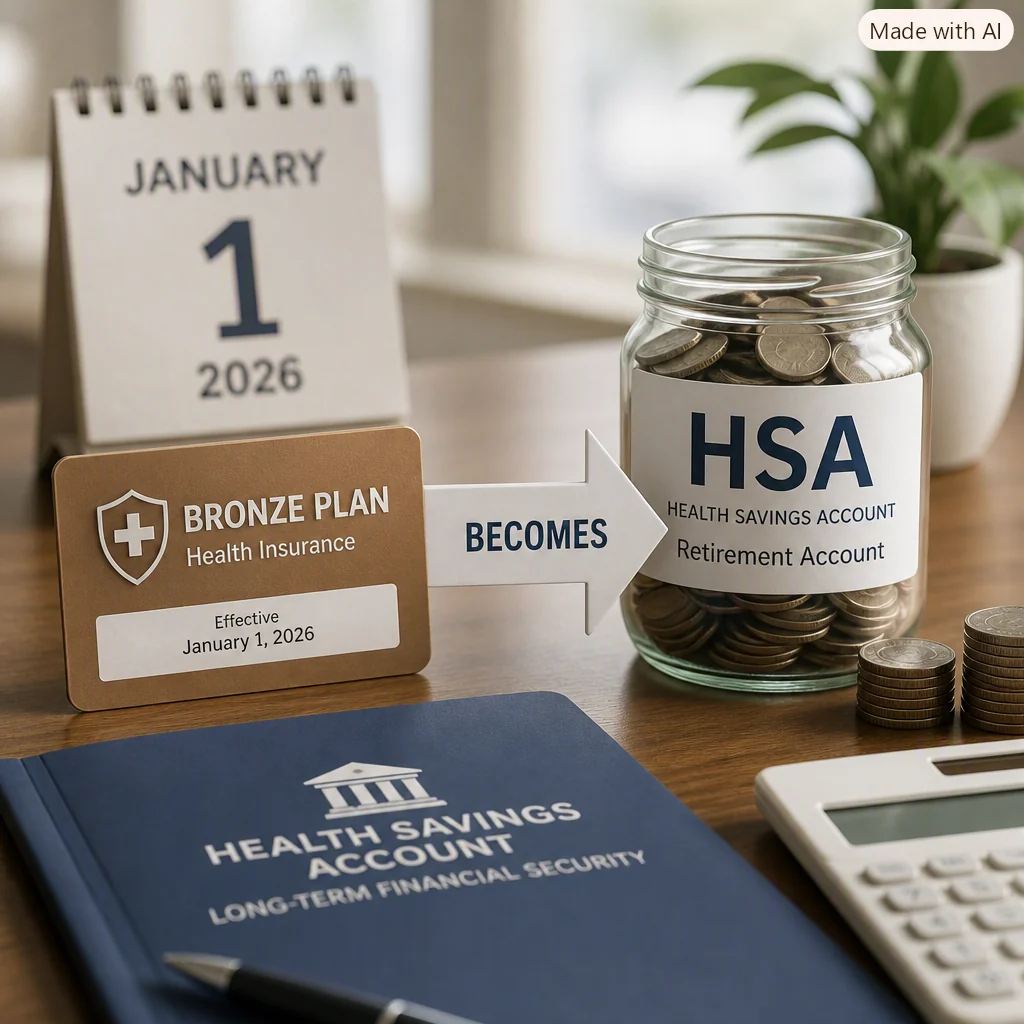
Once your emergency fund is fully funded and working, the next step is to put your money to work beyond savings. The one-page investing plan is the logical next move — it's built for people who have their foundation in place and are ready to start building long-term wealth. And if your employer offers a high-deductible health plan, a funded emergency fund is exactly what makes the HDHP viable — it covers the deductible gap while your HSA compounds tax-free in the background.
Frequently asked questions
What actually counts as an emergency?
A real emergency is an unexpected, necessary expense that you can't defer without serious consequences: a car repair that keeps you from getting to work, a medical or dental bill, a broken appliance that makes the home uninhabitable, or a sudden job loss. It is not a sale, a vacation, a planned expense you didn't budget for, or anything you had time to anticipate. A good test: if you'd known about this expense three months ago, would you have budgeted for it? If yes, it's not an emergency — it's a planning gap.
Should I invest instead of building an emergency fund?
No — build the emergency fund first. This surprises people, but the math is clear. If you invest $500 a month but have no emergency fund, one $3,000 unexpected expense forces you to either sell investments (potentially at a loss, and with tax implications) or take on high-interest debt. Either outcome erases far more than the potential investment gains. Build a $1,000 starter fund first, then split contributions between the full emergency fund and your investment accounts if you want to do both at once. Once the fund is fully funded, shift everything toward investing. The first paycheck guide covers how to prioritize these buckets from the very beginning.
I have high-interest credit card debt. Should I pay that off before building the fund?
Build the $1,000 starter fund first, then aggressively pay down high-interest debt, then finish building your full emergency fund. The logic: without any cushion, you're one emergency away from adding more high-interest debt — which defeats your payoff efforts. The $1,000 starter fund prevents that. Once your high-interest debt is gone, the monthly cash flow freed up accelerates building your full fund faster than you'd expect.
Can I keep my emergency fund in a Roth IRA?
Technically, you can withdraw Roth IRA contributions (not earnings) at any time without taxes or penalties. Some people use this as their emergency fund. In practice, this isn't a great idea: it muddies the line between emergency spending and retirement saving, it trains you to think of retirement money as accessible, and you can't put the money back once it's out (Roth IRA contributions are subject to annual limits). A dedicated HYSA keeps the purposes clear and the money appropriately separate.
How long will it realistically take to build a full emergency fund?
It depends on your savings rate, but here's a rough timeline: if you save $300 a month and your target is $9,000, you're there in 30 months. Save $500 a month and you're there in 18. A windfall — tax refund, bonus — can cut that in half. The point isn't to rush it; it's to start it and automate it so progress happens consistently in the background. Most people who commit to a monthly auto-transfer are surprised how quickly the balance builds when they stop watching it closely.