⚠️ Not financial advice: This post is for educational purposes only. We're not licensed financial advisors. Tariff policies change frequently — verify current conditions before making major financial decisions.
🤖 This article was produced with AI assistance and reviewed by our editorial team.
Nobody asked for this. But here we are: a sweeping set of tariffs introduced in 2025 and expanded in 2026 are quietly adding hundreds of dollars a month to what it costs to live a normal life. Electronics, clothing, groceries, appliances, cars — the price increases aren't dramatic on any single item, but they're consistent, they're compounding, and they're hitting right when most budgets were already stretched thin.
The good news is that a tariff shock is not the same thing as a permanent income cut. It's a cost shift — and cost shifts can be managed. This post gives you a concrete four-step framework to absorb the impact without starting your entire financial life over.
What tariffs are actually doing to your wallet right now
Before you can defend your budget, it helps to understand exactly what you're defending against. Tariffs are taxes on imported goods, paid by the importer (typically a U.S. company) and almost always passed along to consumers through higher prices.
The 2026 tariff regime is broad. Major categories affected include:
Congressional Budget Office estimates and independent analyses put the average middle-income household cost at $2,512 extra per year in 2026 — or roughly $130–$315 more per month depending on your spending mix (as of June 2026; estimates vary by source and household composition). Higher-spending households in electronics and clothing-heavy categories will feel it more. Lower-income households, who spend a larger share of income on necessities, get hit proportionally harder.
💡 The key insight: The tariff impact is uneven. Your actual exposure depends entirely on what you buy and where it comes from. A household that buys mostly domestic food, rents, and rarely buys electronics will feel far less than one that just bought a new laptop, a car, and a couch this year.
Step 1 — Run a tariff audit on your own spending
Pull up your last two or three months of spending (your bank app, credit card statements, or a budgeting tool). Go category by category and ask: is this category tariff-exposed?
Use the grid above as your guide. Mark each category as high, medium, or low exposure. Then tally what you spend in the high and medium categories — that's your real risk number, not the $2,512 average.
Most people are surprised by what they find. A household that doesn't buy many electronics or big-ticket imported goods might find their actual tariff exposure is closer to $50–$80/month rather than $200+. A household that frequently replaces tech or buys a lot of fast fashion might find it's significantly higher.
The audit isn't about feeling bad about your spending — it's about knowing where the pressure is actually coming from. You can't target a problem you haven't located yet.
Rally here. I ran my own audit. Turns out most of my spending is on food, walks, and the occasional agility class. Low tariff exposure. Very smug about this. You can do the audit too. It takes twenty minutes and it's much more useful than refreshing economic news for the fourth time today.
Step 2 — Shift before you buy
Once you know where you're exposed, there are two levers: when you buy and what you buy. Neither requires dramatic lifestyle changes.
Electronics and appliances
If a device is working fine, delay the upgrade. The "good enough" test applies here: if your phone, laptop, or appliance is functional, the tariff-inflated replacement cost rarely makes economic sense right now. If a replacement is genuinely necessary, buy refurbished (domestic refurbishment, no tariff impact) or certified pre-owned rather than new.
Clothing and footwear
Most fast fashion is heavily tariff-exposed. This is a genuine opportunity to shift toward secondhand — ThredUp, Poshmark, local thrift stores — where prices are entirely decoupled from import tariffs. Domestically made brands are another option, though they carry a premium for different reasons.
Groceries
Domestic and seasonal produce is less tariff-affected than imported packaged goods. Shifting more of your grocery spend toward fresh domestic items (check the label — "Product of USA" matters here), dried beans, grains, and staples from domestic producers can meaningfully reduce your exposure. Store-brand versions of packaged goods also tend to use more domestic sourcing than name brands.
Stacking grocery savings tools on top of this helps too — store digital coupons, a cash-back card with 3x on groceries, and apps like Fetch or Ibotta compound quickly. The grocery stacking post covers the full system.
Big-ticket purchases
Vehicles and appliances are harder to substitute, but timing matters. If you're in the market for a car, domestic brand models with higher U.S. parts content are less affected than imported models. If the purchase can wait six to twelve months, tariff policy could shift — it has shifted multiple times already in 2025–2026 and is worth monitoring before a major commitment.
Step 3 — Build a tariff buffer into your budget
Based on your Step 1 audit, estimate your realistic monthly tariff exposure. For most households, this lands somewhere between $50 and $200/month. Set that amount aside as a dedicated buffer — not for investing, not for fun spending, but specifically to absorb tariff-driven cost increases without raiding other budget categories.
Here's a simple way to calculate a starting buffer:
| Your exposure level | Estimated monthly buffer |
|---|---|
| Mostly services + domestic groceries, few goods | $50–$80/month |
| Average mix of groceries, clothing, some electronics | $100–$150/month |
| Frequent electronics, lots of imported goods | $175–$315/month |
Park this buffer in a high-yield savings account (HYSA) — not a checking account where it blends with daily spending. Ally Bank is a solid option, currently offering competitive rates on savings with no minimum balance. The goal is that when a tariff-inflated expense hits — a higher grocery bill, a repair that costs more than expected — you have a designated place to absorb it rather than going into credit card debt.
The buffer isn't a permanent fixture. If tariff policy eases (which it may — it's changed repeatedly already), you can fold that amount back into savings or investing. Think of it as a temporary shock absorber, not a permanent budget line.
💡 Already have an emergency fund? Don't raid it for tariff costs. The emergency fund covers true emergencies — job loss, medical bills, major unexpected repairs. Tariff-driven price increases are an ongoing expense, not an emergency. Keep them separate.
If you haven't built your emergency fund yet, the emergency fund guide covers how much you actually need and exactly where to keep it.
Step 4 — Protect your savings rate, not just your spending
The most common mistake people make during an inflationary period isn't overspending — it's pulling back from investing out of fear. Stopping your 401(k) contributions or moving investments to cash in response to tariff-driven uncertainty is almost always the wrong call.
Here's why this matters: tariff-driven inflation erodes the purchasing power of cash held in low-yield accounts. If your savings account earns 4% and inflation is running at 4–5%, you're effectively losing ground by sitting in cash. Staying invested in diversified assets — index funds, target-date funds — gives your money the best long-term chance of outpacing inflation, even in a volatile year.
What to keep doing
- Contribute at least enough to your 401(k) to capture the full employer match — that's an instant 50–100% return that no tariff can touch
- Keep your Roth IRA contributions on track — tariff-inflated years are actually good times to be buying more shares at temporarily lower prices
- Stay in your index funds — broad market exposure has consistently outpaced inflation over 10+ year periods, and trying to time the market around tariff news has a poor track record
A small hedge worth knowing about
If you want a modest, direct inflation hedge, I Bonds and TIPS (Treasury Inflation-Protected Securities) are two government-backed options that adjust with inflation. I Bonds can be purchased directly at TreasuryDirect.gov — the annual purchase limit is $10,000 per person (as of June 2026). They're not exciting, but they're one of the few instruments that guarantee you won't lose ground to inflation. TIPS can be purchased through a brokerage or through TreasuryDirect.
Neither of these should replace your core investing strategy. Think of them as a small insurance position — maybe 5–10% of your fixed-income allocation — not a major portfolio move.
For the full investing framework — including how to set it up once and let it run automatically — the one-page investing plan walks through the complete system.
What not to do
Just as important as the four steps above is knowing what to avoid. These are the moves that feel logical in an uncertain moment but tend to make things significantly worse.
⚠️ Don't carry a credit card balance to cover tariff-inflated costs. Average credit card APRs are running around 20–25% in 2026, with LendingTree reporting 23.79% as of June 2026 (rates vary by card and creditworthiness). Financing a higher grocery bill or a necessary appliance replacement at 23% interest amplifies your tariff exposure dramatically. If cash flow is tight, the buffer in Step 3 is specifically designed to prevent this.
Don't panic-sell investments. Market volatility around tariff announcements is real, but it's short-term noise. Selling into a tariff-driven dip locks in losses and puts you on the sidelines for the inevitable recovery. The wealth gap post explains exactly why staying invested is one of the most powerful advantages available to anyone.
Don't hoard goods. Buying six months of paper towels or stocking a chest freezer with imported meat to "beat the tariffs" is almost never worth the capital you're tying up. The math rarely pencils out when you factor in storage costs, spoilage risk, and the opportunity cost of that cash sitting in goods rather than earning interest.
Don't assume tariffs are permanent. U.S. tariff policy has shifted multiple times in the past eighteen months. Building a modest, flexible buffer (Step 3) lets you adapt to either direction without making irreversible financial decisions based on current policy.
Putting it all together
The goal here isn't to eliminate every dollar of tariff impact — that's not realistic. The goal is to absorb the hit in a controlled way that doesn't derail everything else you've built. Here's the framework at a glance:
- Audit: Find where your actual tariff exposure is, not the average
- Shift: Delay upgrades, substitute where it's easy, lean on domestic and secondhand options
- Buffer: Set aside $50–$315/month in an HYSA specifically for tariff-driven cost increases
- Protect: Keep investing, don't move to cash, consider a small I Bond or TIPS position if you want an inflation hedge
That's it. The households that come out of a tariff environment in better shape aren't the ones who panicked or made dramatic moves — they're the ones who made a few targeted adjustments and kept their long-term systems running.
If you want to build the underlying system that makes all of this easier — the automated savings and investing setup that runs in the background regardless of what's happening with tariffs — the automated budget post is the best place to start.
Frequently asked questions
How long will tariffs last?
Nobody knows — and anyone who claims otherwise is guessing. U.S. tariff policy has changed multiple times in 2025–2026 already, with exemptions added, rates adjusted, and certain categories paused or reinstated. Build a flexible buffer rather than making permanent financial decisions based on current policy. If tariffs ease, you redirect the buffer to savings or investing. If they persist, you're covered.
Should I stock up on big-ticket items now to beat tariff prices?
Usually not. For electronics and appliances, prices have already risen on most in-stock items — you're not beating anything. For items not yet affected, stocking up ties up capital that earns nothing sitting in a garage. The exception might be a genuinely necessary purchase you were planning to make anyway in the next 3–6 months — in that case, buying now at a known price may make sense. But buying speculatively rarely does.
Is this different from regular inflation?
Yes, in a few meaningful ways. Regular inflation tends to be broad-based and gradual. Tariff-driven price increases are category-specific (imported goods hit harder than services or domestic products) and can be sudden when new policies take effect. They can also reverse — unlike structural inflation, which rarely fully unwinds. This is why category-specific auditing (Step 1) matters more here than a general inflation response.
My budget is already stretched thin. What should I prioritize?
In order: (1) Capture your full 401(k) employer match — that's free money no tariff affects. (2) Build or maintain a small cash buffer so you're not reaching for credit cards when tariff-inflated bills arrive. (3) Apply the substitution tactics in Step 2 to your highest-spend categories. (4) Don't stop investing, even small amounts — the compounding advantage is too valuable to pause. The quick wins post has seven specific moves that free up $100+ each, which can seed your buffer.
Will tariffs affect my rent or housing costs?
Indirectly, yes. Building materials (lumber, steel, aluminum) are tariff-exposed, which raises construction costs and slows new housing supply — putting upward pressure on rents over time. Direct rent increases from tariffs are slower to materialize than goods price increases, but they're a real secondary effect. Services like rent, haircuts, and local restaurants are generally lower-exposure than imported goods.
You might also like
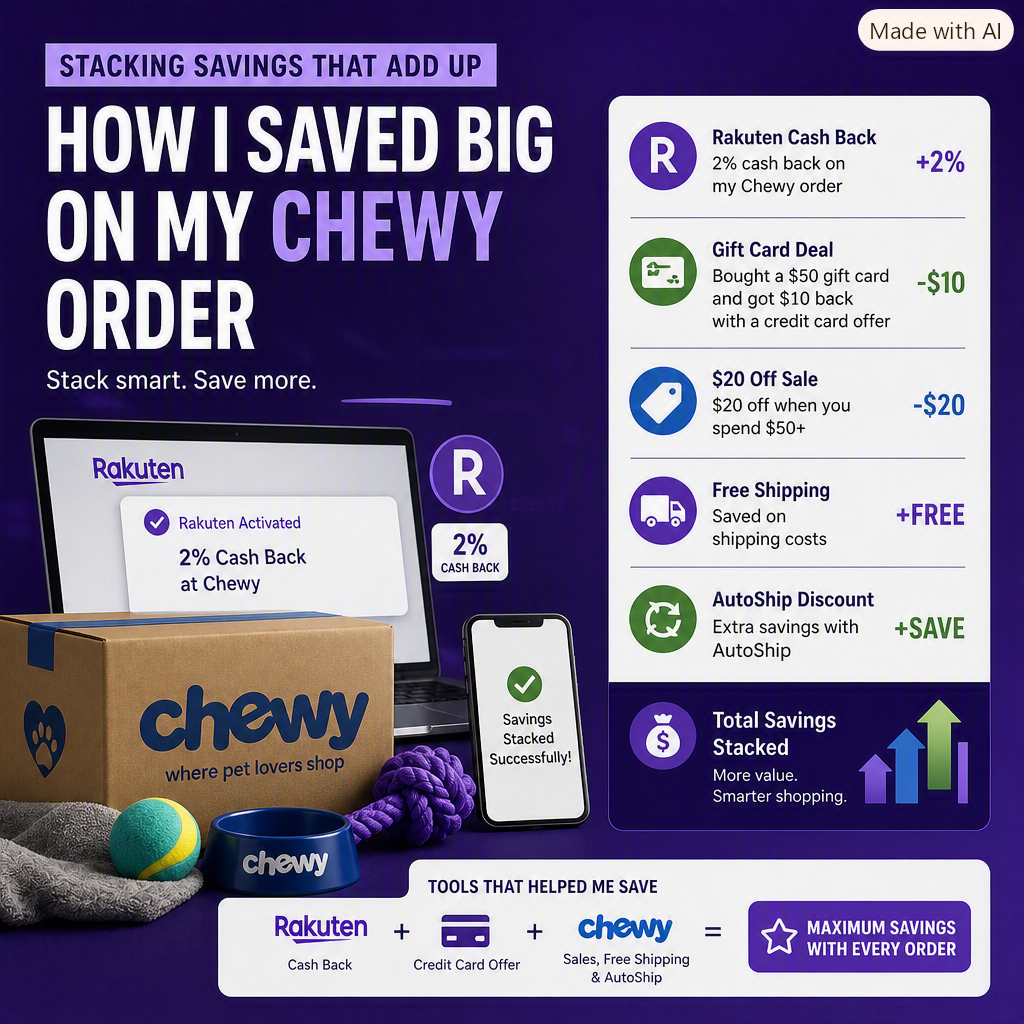
Stack the Savings: How I Cut a $65 Chewy Order Down to About $32
A routine $65.50 Chewy order became a real-world test of four savings layers that have nothing to do with each other: Rakuten's browser extension, a gift card bought through a card offer, a site-wide sale, and an autoship discount. Here's the actual receipt and the math showing how it landed at about $32.60 out of pocket.

The 90-Day Runway: How to Prep Your Money Before the Layoff Email
Almost everything written about layoffs is written for people who have already been laid off — which is the wrong moment, because the most valuable moves all require the one thing you stop having when the meeting ends: a job. Here’s the 90-day version: the borrowing to do while you’re still employable on paper, how to find your severance number before you need it, and how to convert “I spend $4,200 a month” into an actual runway in months.
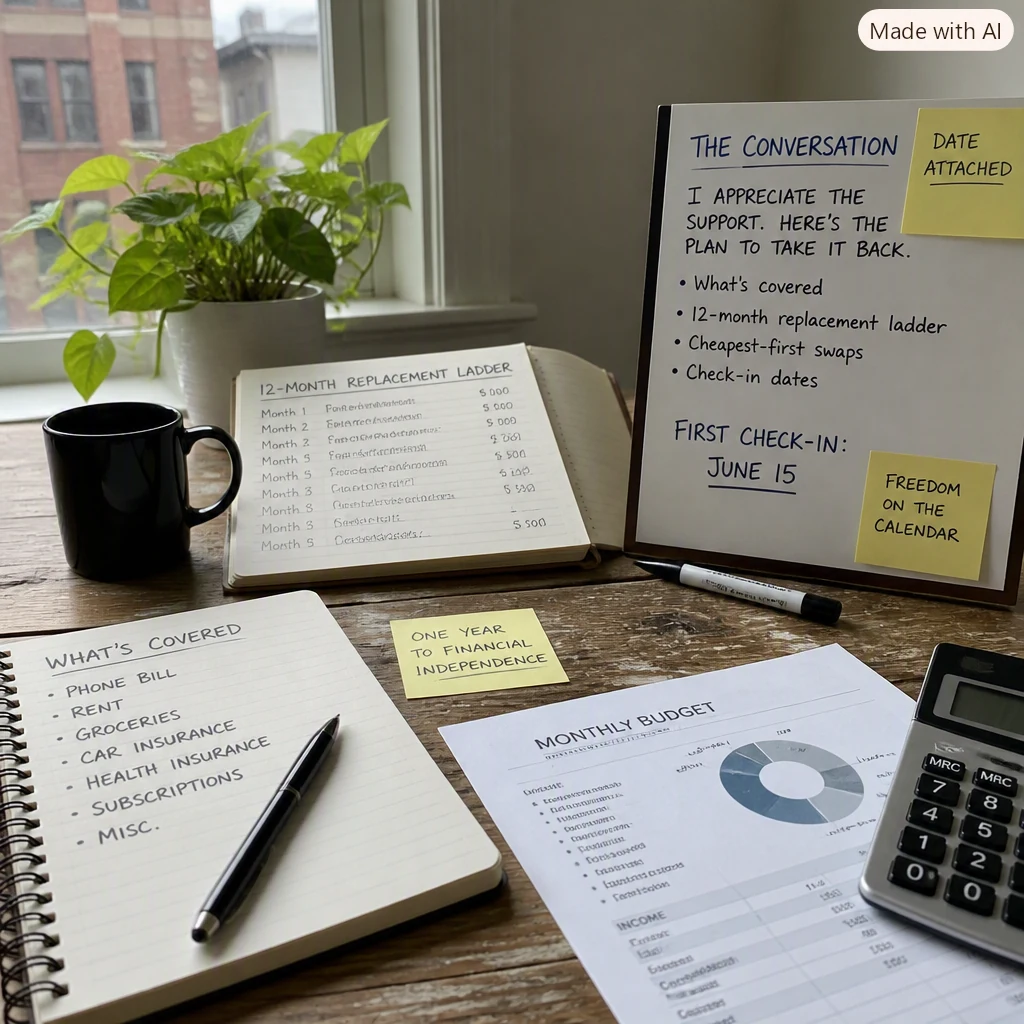
Still on the Family Payroll: The 12-Month Plan to Get Off Your Parents’ Money
Every article about adult kids on the family payroll is written for the parents — should you cut them off, are you enabling them. This one is for the person receiving the money. The Fed found 47% of adults 18–29, and one in four aged 30–44, still get help from outside their household, most often for a phone bill, general expenses, or rent. Here’s how to name what you’re actually being covered for, build a replacement ladder that takes it back cheapest-first over twelve months instead of all at once, and have the conversation with a date attached.