🔗 Heads up: Some links in this post are referral links. If you apply or sign up through them, I may receive a commission — at no extra cost to you. I only recommend products I genuinely believe in.
⚠️ Not financial advice: This post is for educational purposes only. I'm not a licensed financial advisor. Please do your own research and consult a professional before making any financial decisions.
Of all the places inflation has hit hardest over the past few years, groceries are where most families feel it most. A basket of food that cost $120 in 2021 routinely costs $160 or more today — and unlike dining out, you can't exactly skip the grocery run. For most households, groceries are now one of the top two or three monthly expenses, and the pressure at checkout has become a weekly reality.
But here's what most shoppers don't realize: you're likely leaving $20, $30, or more on the table every single week. Not by couponing in the old-fashioned sense — no scissors required. The strategy is called stacking, and it means layering multiple rewards programs on the same purchase so that each one runs independently and simultaneously. Applied to groceries, a well-built stack can put 15–20% back in your pocket on a typical weekly shop — without changing what you buy or where you buy it.
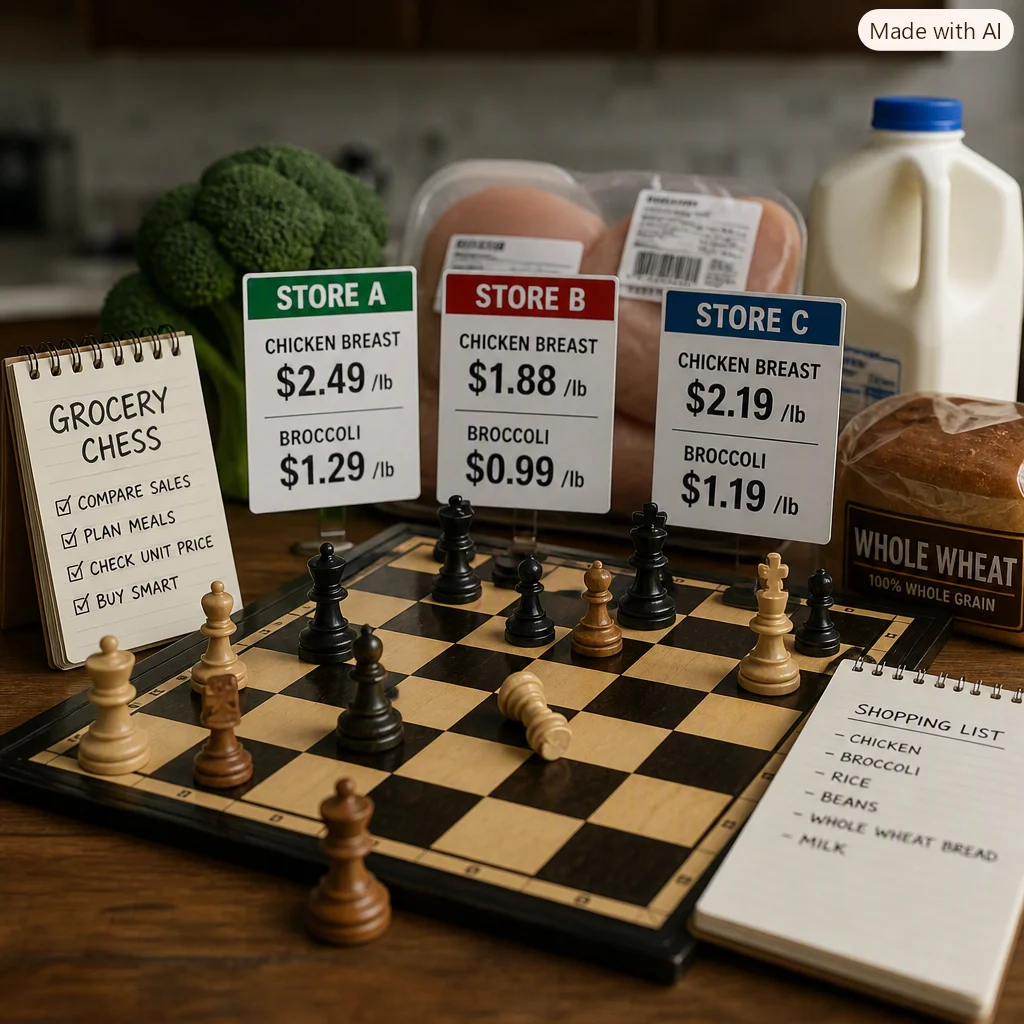
Stacking is about earning more back on the groceries you buy. It's not the only lever, though — the other one is spending less in the first place by comparing prices before you shop at all, which is the core idea behind grocery chess, the store-comparison strategy millennials are using to fight rising food prices. Combine the two and you're both paying less and earning more on what's left.
How the Grocery Stack Works
The grocery stack has three independent layers. Each one operates separately — your credit card has no idea you used a store coupon, and your receipt-scanning app has no idea what card you paid with. That independence is exactly what makes stacking so powerful: you're collecting from all three at once, on the same transaction.
The simple version: Clip digital coupons in your store's app before you shop. Pay with a card that earns elevated rewards on groceries. Scan your receipt in Fetch or Ibotta when you get home. Three steps, three payouts — on the exact same groceries.
Layer 1: Your Store's Digital Coupon App
Every major grocery chain now has a free app loaded with digital coupons — discounts that activate automatically when you scan your loyalty card or phone number at checkout. Most shoppers either don't use them or only clip a few. The ones who do it methodically, every week before they shop, consistently save $10–$20 off their bill without buying a single item they weren't already planning to purchase.
Here are the stores with the strongest digital coupon programs right now:
Ralphs (Kroger family)
The Ralphs app — powered by Kroger's platform — is one of the most generous in the business. Browse the "Savings" tab before every shop and clip anything relevant: produce, proteins, household items, and personal care. The app also surfaces personalized offers based on your purchase history, so the longer you use it, the more targeted (and valuable) the deals get. Link your Ralphs Rewards card and coupons clip automatically at checkout — no paper required.
Albertsons & Pavilions (Albertsons Companies)
Albertsons and Pavilions share the same rewards platform — the Just for U program. Open the app, browse "Deals & Rewards," and clip what applies to your list. Beyond standard coupons, Just for U also offers personalized deals, gas rewards, and periodic "10 for $10" or BOGO offers that stack directly with your credit card rewards. If you shop at both Albertsons and Pavilions, your account and clipped coupons transfer seamlessly between them.
Target Circle
Target Circle is worth downloading even if you only visit occasionally. The app features weekly Circle Deals across grocery, household, and personal care categories — typically 10–30% off on a rotating selection. What makes Target especially powerful for stacking is the Target RedCard: it adds an automatic 5% off your entire purchase on top of any Circle Deals already applied. That means clipped app discounts on specific items plus 5% off everything else, before you even factor in a separate rewards credit card.
Safeway & Vons
Safeway and Vons are also part of the Albertsons Companies family, running the same Just for U platform. If you shop at either chain, the same account works across all of them. Safeway in particular often runs deeper discount events — like "Just for U Exclusive" prices that are only available when your loyalty card is linked — that can bring meaningful savings on staples like meat, dairy, and packaged goods before any credit card rewards are applied.
Make it a habit: Set a 5-minute reminder the night before your weekly shop to open your store's app and clip everything relevant. This one habit alone can save $400–$800 per year for a typical household — and that's before adding any other layer to the stack.
Layer 2: The Right Credit Card
Once your store discounts are clipped, the next layer is choosing the card that earns the most on grocery spending. Unlike the restaurant stack, the grocery card landscape has a true standout — and if you're spending $600 or more per month on groceries, it's worth knowing about. Here are the best options right now:
Which card should you use?
If you're a regular Ralphs, Albertsons, or Pavilions shopper and you spend $500+ per month on groceries, the Amex Blue Cash Preferred earns back its $95 annual fee within the first two months and keeps compounding from there. If you'd rather avoid the annual fee entirely, the Citi Custom Cash is the most effortless upgrade — it figures out that groceries are your top category and rewards you accordingly, automatically. For Whole Foods shoppers, the Amazon Prime Visa is the obvious choice, especially combined with the store's weekly Prime Member Deals.
The Hidden Layer: Card-Linked Grocery Offers
Before getting to receipt apps, there's a bonus layer most shoppers overlook entirely — and it's already sitting inside your credit card account. Both Amex and Chase periodically load targeted, card-specific offers for grocery chains directly onto your card. These run completely independently of your base grocery rewards rate and your store's loyalty app, which means they truly stack on top of everything else. You browse the offers in your card's app, add the ones relevant to your upcoming shop, and the credit posts automatically when you pay at that store — no code, no coupon, no extra step at checkout.
Amex Offers
Available on any American Express card — including the Blue Cash Preferred and Blue Cash Everyday. Log into the Amex app or website and navigate to "Amex Offers & Benefits." Grocery chains like Whole Foods, Albertsons, and others appear here on a rotating basis. A typical offer might read "$10 back when you spend $50 at Whole Foods" or "10% back at Albertsons, up to $15." Add the offer to your card, shop as normal, and the statement credit posts automatically within a few days. Amex Offers refresh frequently — checking every week or two before your grocery run is worth the 60 seconds it takes. When an offer lines up with your weekly shop, the savings stack directly on top of your 6% base rate without any additional effort.
Chase Offers
Chase cardholders — including Freedom Flex and Sapphire Preferred users — can access card-linked grocery offers through the Chase app: tap your card → "More" → "Chase Offers." Grocery store deals appear here periodically, offering statement credits at specific chains. These are completely separate from your base rewards rate, so if you're earning 5% via Chase Freedom Flex on a quarterly grocery promotion and you also have an active Chase Offer for that store, both rewards post independently on the same transaction. One checkout, two payouts — on top of your store's own coupon savings and your receipt app.
Take 60 seconds before your weekly shop: Open both your Amex and Chase apps, check for any grocery or supermarket offers, and add them to your card. You won't find one every week — but when you do, it's an entirely free addition to an already strong stack. One clip, automatic credit, zero extra effort at checkout.
Layer 3: Receipt-Scanning Apps
The third layer is where many people are leaving the most money unclaimed. Receipt-scanning apps reward you for purchases you've already made — you simply upload a photo of your grocery receipt after shopping, and the app credits you for qualifying items. They work independently of your credit card and your store's loyalty program, which means all three run simultaneously on the same shop.
Fetch Rewards
Fetch is the most frictionless receipt app available. After shopping, open the app and photograph your receipt — Fetch scans it automatically and awards points for any qualifying brands and products. Points are redeemable for gift cards to Amazon, Target, Walmart, Starbucks, and hundreds of other retailers. What makes Fetch stand out is its breadth: it rewards a wide range of everyday grocery brands, not just specific deals you had to activate beforehand. There are no offers to clip and no pre-planning required — simply shop, scan, earn. Fetch also runs periodic bonus point events on specific brands that can significantly boost the return on a single receipt.
Ibotta
Ibotta takes a slightly more structured approach than Fetch but delivers higher per-item cash back when you work it into your routine. Before shopping, browse the Ibotta app and add cash back offers on specific products — these range from $0.25 to $3 or more per item. After checkout, scan your receipt and Ibotta credits the cash back directly to your account, redeemable via PayPal, Venmo, or gift cards. The key habit is checking Ibotta before your shop, not after — offers must be added in advance for them to apply. Used together with Fetch (which requires no pre-planning), the two apps cover different ground and compound each other's value on the same receipt.
Use both: Fetch and Ibotta are not mutually exclusive — you can scan the same receipt in both apps. Ibotta pays on specific pre-added offers; Fetch pays on a broad base of qualifying brands. Together, they consistently cover more ground than either one alone.
The Stack in Action
Here's what a typical $150 weekly grocery run looks like when all three layers are working together. This example uses Ralphs, the Amex Blue Cash Preferred, and both receipt apps.
| Layer | Source | How It Works | Saved on $150 |
|---|---|---|---|
| Store App | Ralphs digital coupons | Clipped before shopping, applied at checkout | –$15.00 |
| Credit Card | Amex Blue Cash Preferred | 6% cash back on the $135 you paid | $8.10 |
| Receipt App | Ibotta (pre-added offers) | Cash back on qualifying items already on your list | $4.50 |
| Receipt App | Fetch (auto-scan) | Points on qualifying brands, redeemable for gift cards | $2.00 |
| Total back on this grocery run | $29.60 (~20%) | ||
That's roughly $29 back on a $150 shop — or about $1,500 per year if you run this stack every week. The Ibotta and Fetch numbers will vary depending on what's in your cart, but the store coupons and the 6% credit card rate are consistent every single week. Even in a lighter week where the receipt apps only return $3–4 combined, you're still capturing 14–15% back consistently.
The one habit that unlocks everything: Do your app prep the night before — clip store coupons, add Ibotta offers, and make sure your grocery card is in your wallet. The whole routine takes about 10 minutes and makes every dollar you spend at the grocery store work harder than it did before.
A Few Things Worth Knowing
The same guardrails that apply to restaurant stacking apply here. Always pay your credit card balance in full each month. If you're carrying a balance, interest charges will cancel out every dollar of cash back you earned — and then some. The math only works when the card is paid off.
Also worth knowing: the Amex Blue Cash Preferred's 6% rate applies to U.S. supermarkets — not warehouse clubs like Costco or Sam's Club, and not superstores like Walmart or Target (which earn at a lower rate on that card). If you primarily shop at Costco, the Costco Anywhere Visa® by Citi earns 2% on all Costco purchases and is worth considering instead — and if you're not sure the membership itself pencils out for your household size, we ran the actual Costco break-even math for a single person. For Target, the store's own RedCard provides a reliable 5% off everything and stacks directly with Target Circle app deals.
Finally, Ibotta's offers require you to add them before checkout. Fetch has no such requirement — it scans your receipt after the fact. Building the habit of checking Ibotta before you leave the house is the one active step in the whole stack. Everything else runs automatically once it's set up.
Grocery prices may not come down anytime soon — but that doesn't mean you have to absorb the full impact at checkout. A store loyalty app, the right credit card, and a receipt-scanning app are all free and take less than an hour to set up. Once they're in place, the stack runs on every single shop without any extra effort.
Start with the layer that takes the least setup — clipping digital coupons in your store's app costs nothing and saves money immediately. Add the credit card when you're ready. The same stacking logic applies to cutting 30–50¢ off every gallon at the pump, earning up to 26% back when eating out, lowering your electric bill as rates keep climbing, and even a routine online order like pet supplies — worth stacking across all five if you want to maximize every dollar you spend. Add the credit card when you're ready. Then scan your next receipt in Fetch and Ibotta and see what comes back. You'll wonder why you weren't doing this from the start.
Frequently Asked Questions
What is grocery stacking?
It's layering three independent savings programs on the same shopping trip: digital coupons clipped in your store's app, a credit card that earns elevated rewards on groceries, and a receipt-scanning app like Fetch or Ibotta. Each layer pays out separately on the same purchase.
How much can stacking save on groceries?
A well-built stack can return 15–20% on a typical weekly shop without changing what you buy. For an average household, that adds up to $1,000 or more per year.
Do I need paper coupons to do this?
No scissors required. Every major chain — Ralphs, Albertsons, Safeway, Vons, Target — has a free app where coupons clip digitally and apply automatically when you scan your loyalty card or phone number at checkout.
Are receipt-scanning apps like Fetch and Ibotta worth it?
Yes — they run independently of how you paid, so they stack on top of coupons and card rewards. Methodical users consistently pull an extra $10–$20 per week without buying anything they weren't already planning to purchase.