⚠️ Not financial advice: This post is for educational purposes only. I'm not a licensed financial advisor. Please do your own research and consult a professional before making any financial decisions. Full Disclaimer →
🤖 This article was produced with AI assistance and reviewed by our editorial team.
The renewal letter shows up about ninety days out, it says your rent is going up, and roughly nobody replies to it. That's the part worth changing. For four straight years, a construction wave has been quietly stacking the deck in renters' favor — and most tenants have spent that entire stretch accepting the first number they were offered.
Here's the urgent part: that stretch is ending. The same data that proves your leverage is real also shows it starting to reverse — which means the renewal sitting in your inbox may be the last one you get to negotiate from real strength. So let's make it count, with real comps, the right timing, and an email you can send in ten minutes.
The leverage is real — and it's already fading
Landlords have spent this cycle competing for tenants instead of the other way around. As of spring 2026, 39.8% of rental listings on Zillow came with a concession — free rent, waived fees, discounted move-in costs — up five percentage points year over year. Before the pandemic, that figure was closer to one in six. Apartment List's numbers tell the same story from the property side: about 35% of properties were offering a month of free rent or more in June 2026, versus 25% a year earlier.
And prices actually fell. National median rent sat at $1,385 in June 2026, down about 1.2% year over year — the kind of number that basically doesn't happen in rental housing.
But look at what happened next. Apartment List's July 2026 report flagged that vacancy among stabilized properties had ticked down to 7.2% from its February peak — the first downward inflection in over four years — with rent growth, occupancy and renter urgency all moving the same direction at once for the first time since 2022. They call the recovery "maybe a bit fragile." Fair. But fragile-and-turning still means the discount you can win this year is probably bigger than the one you can win next year.

Rally's take
"Every one of those percentages is really just a landlord somewhere staring at an empty unit. You don't have to feel bad for them — but you should absolutely negotiate like you know."
Find out what your unit actually rents for today
Almost every failed rent negotiation fails the same way: the tenant asks for a break, the landlord asks why, and the tenant has nothing but a feeling. Twenty minutes of research fixes that.
Start inside your own building. Pull up your complex on Zillow or Apartment List and look at what units like yours are listing for right now. This is the single most powerful comp you can find, because if your building is advertising your exact floor plan for less than your renewal price, the argument writes itself. Then widen out: same ZIP code, same bed and bath count, similar age and amenities. Five listings is plenty. Screenshot them.
The crucial step is converting concessions into an actual number, because a sticker price with a month free attached is not the price. One month free on a 12-month lease is roughly an 8.3% discount on the effective rent. A unit listing at $1,800 with a month free is really costing that tenant about $1,650 a month — and that $1,650 is the figure you compare against your renewal, not the $1,800.
Ask 60 to 90 days out, not the week it's due
Timing is most of the game. Renewal offers typically arrive 60 to 90 days before your lease ends, and that gap exists because your landlord needs it: if you're leaving, they want the unit listed and re-leased before it sits empty. That's your entire source of leverage, and it evaporates the moment they've stopped worrying about it.
So reply within a few days of receiving the offer — not the week before you have to sign. Early, you're a problem they can still solve cheaply. Late, you're a tenant with no time to move, and they know it.
Season matters too. Leases ending between roughly November and February negotiate better than summer ones, because winter vacancies are slow to fill. If your renewal lands there, say so out loud — "I know December is a hard month to re-lease this unit" belongs in the email.
The ask: a script you can actually send
Keep it short, warm, specific, and easy to say yes to. Name a number — whoever names the first number sets the range everything else negotiates around — and give them a reason to keep you that isn't just sentiment.
Subject: Renewal for Unit 4B — quick question
Hi [Name],
Thanks for sending the renewal. I'd like to stay — I've been here two years, paid on time every month, and I'm ready to sign another 12 today.
The one snag is the increase to $1,935. Two comparable one-bedrooms in the building are currently listed at $1,780, and similar units in the ZIP are advertising a month free, which works out to about $1,700 effective. Could we do $1,800 for a 12-month renewal?
Happy to sign this week either way — just wanted to ask before I do.
[Your name]
If the rent itself won't move — and sometimes it genuinely can't, because corporate landlords report headline rents to investors — pivot to the things that don't touch the headline number. Ask for a month free, waived parking, waived pet rent, a cap on next year's increase, covered utilities, or an 18-month term at today's rate. A concession is usually easier for a property manager to approve than a rent reduction, and a free month is worth more to you than $75 off anyway.
When they say no: know your walk-away number
Some landlords will hold firm. That's fine — but don't decide whether to move on vibes. Run the number, because moving to escape an increase is frequently more expensive than the increase.
Say you pay $1,800 and the renewal takes you to $1,935. That's $135 a month, or $1,620 over the year. Now price the exit: a local move for a one-bedroom runs roughly $1,200 to $3,500 with movers, per Forbes Home's 2026 cost guide, plus application and admin fees, utility setup, and any gap between your old deposit coming back and the new one going out.
| Staying vs. moving | Cost |
|---|---|
| Accept the renewal increase ($135 × 12) | $1,620 over the year |
| Local movers, 1BR | ~$1,800 |
| Application + admin fees | ~$150 |
| Utility setup and transfers | ~$100 |
| Two overlapping weeks of rent / time off | ~$400 |
| Cost to move | ~$2,450 up front |
At those numbers, moving to a place at the same rent costs more than eating the increase for a year and a half. Which is why "I'll just move" isn't your best card — the smarter version is "I'll move if the alternative is meaningfully cheaper." A comparable unit at $1,700 with a month free saves roughly $3,700 in year one, clearing the moving cost with room left over. That's a real decision. A $60 difference is not.
Work that number out before you reply and the whole conversation changes: you stop bluffing and start knowing. If your walk-away line is $1,880 and they come back at $1,850, you sign happily. If they hold and a genuinely better unit exists down the street, you move without second-guessing it — and if you're weighing that against buying instead, our breakdown of what the 2026 homebuying math actually looks like is the next thing to read. Either way, that renewal letter deserves a reply.
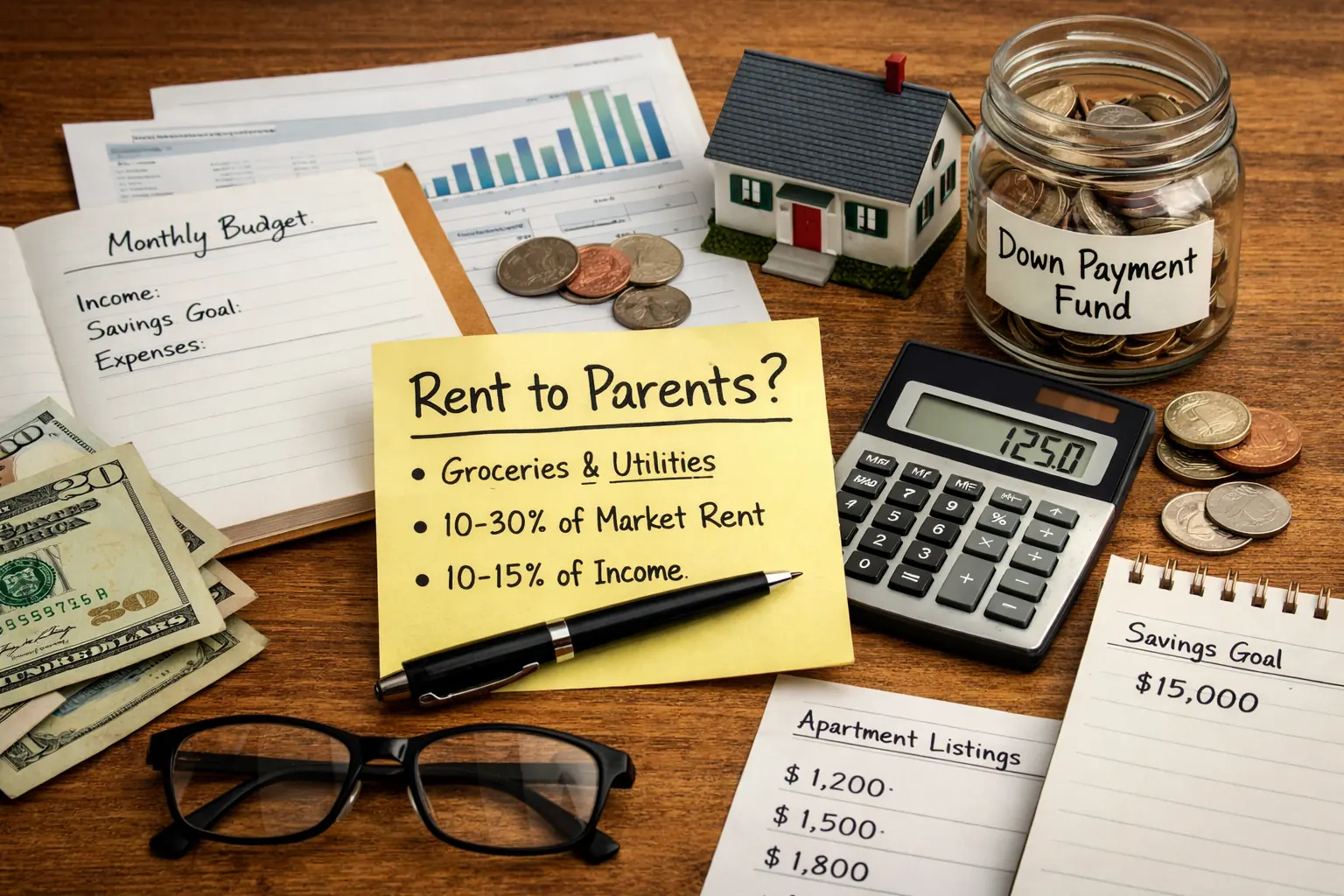
One more move while you're at it: if you're staying put and paying on time anyway, consider making those payments count for something. Rent reporting can put your on-time rent on your credit report — most useful if your credit file is thin. And if you're weighing a move back home to reset your finances, we built a fair-number framework for what to pay your parents.
Frequently asked questions
Can my landlord retaliate if I ask for a lower rent increase?
Asking politely for a smaller increase is a normal business conversation, not a protected legal complaint — so the anti-retaliation statutes most states have on the books (which generally cover things like reporting code violations or joining a tenant organization) usually aren't what protects you here. What protects you is the math: a vacancy costs a landlord far more than the discount you're requesting. They can decline, and they can still raise the rent, but a courteous, well-researched email is not grounds for anything worse.
Does being a long-term tenant actually help me negotiate?
Yes, but only if you make it concrete. "I've been here three years" means little on its own. "I've paid on time 36 months running, never opened a maintenance ticket, and I'm ready to sign another 12 months today" translates your history into the thing your landlord actually cares about: predictable income with no turnover cost.
What if I'm already month-to-month?
You have less structural leverage — no renewal deadline forces the conversation — but you also have the one thing landlords dislike most: the ability to leave with 30 days' notice. Use it honestly. Offer to convert to a fixed 12-month lease in exchange for locking your current rent, which trades your flexibility for their stability.
Should I mention a competing apartment I don't actually plan to take?
Mention real listings, not fake intentions. Saying "two comparable units in this ZIP are listing at $1,720 with a month free" is verifiable and persuasive. Claiming you've signed elsewhere when you haven't is a bluff that collapses the moment they call it — and you'll have spent your credibility right when you need it.